

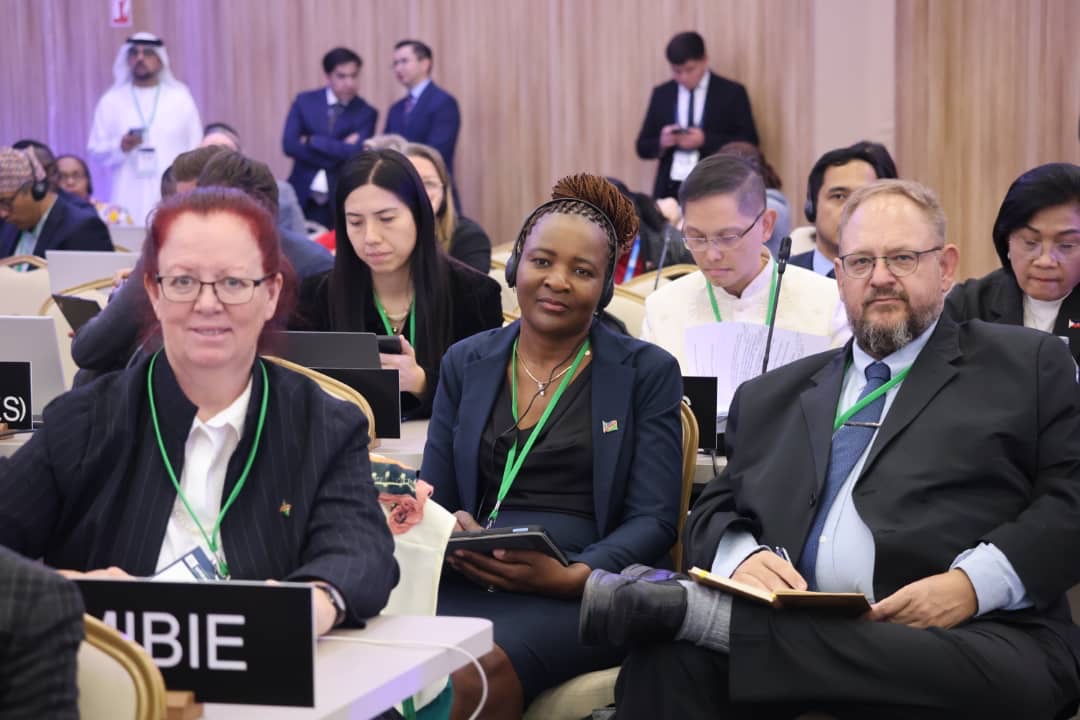
Namibia took part alongside Ministers of Education and senior policymakers worldwide in the Education Commission sessions during the 43rd UNESCO General Conference held in Samarkand, Uzbekistan, from 30 October to 13 November 2025. The Education Commission convened from 31 October to 4 November, focusing on global strides toward Sustainable Development Goal 4—ensuring inclusive and equitable quality education for all.
The Commission’s opening session featured a Ministerial Dialogue titled “Learning Today, Leading Tomorrow”, addressing how to prepare youth for leadership in a world affected by conflict, climate change, technology shifts, and inequality. Discussions emphasized adapting education systems to equip learners with skills and values to foster cohesive, future-oriented societies. Globally, over 250 million children remain excluded from education, with delegates highlighting that at least two children per second must be enrolled in schools daily to meet 2030 goals.
Key priorities included early childhood education, foundational literacy and numeracy, and strengthened technical and vocational education and training (TVET) to help learners and workers meet changing economic and social demands. Samarkand, with its rich history as a Silk Roads hub for trade and knowledge exchange, served as an apt symbolic venue for the global dialogue.
The Commission’s second session, themed “Higher Education in Emergencies: Unlocking Potential and Rebuilding Futures”, gathered leaders to stress integrating higher education into crisis responses. Universities play a vital role in rebuilding societies and offering hope to youth affected by conflict and displacement.
Aligning with the Transforming Education Summit and the upcoming Summit of the Future, discussions called for a renewed social contract in education focusing on diversified skills and harnessing opportunities from the Fourth Industrial Revolution through digital innovation and collaboration. Soft skills, empathy, and social-emotional learning were identified as crucial for human dignity and societal coexistence, with a warning that failure to nurture these would hamper future generations.
Within the Priority Africa context, dialogue concentrated on foundational literacy, numeracy, green skills, and social skills. Participants examined how to capitalize on Africa’s youth demographic and technology while balancing human creativity with artificial intelligence. Research by the Norwegian delegation suggested investing in physical textbooks alongside reduced screen time to protect learners’ mental health.
Early Childhood Development and pre-school stages were reaffirmed as critical in shaping educational pathways. TVET was underscored as essential for reforming education, boosting youth skills, employability, and contributing meaningfully to workforce transformation and economic resilience.
Namibia reiterated its commitment to diversifying skill development, fostering international partnerships, and leveraging innovation for equitable quality education access. The Namibian delegation welcomed UNESCO’s evolving initiatives, including the Global Skills Academy, Greening Education Partnership, Digital Transformation Collaborative, and the AI and Digital Competencies Framework, which support resilient education systems to empower learners amid rapid change.


