


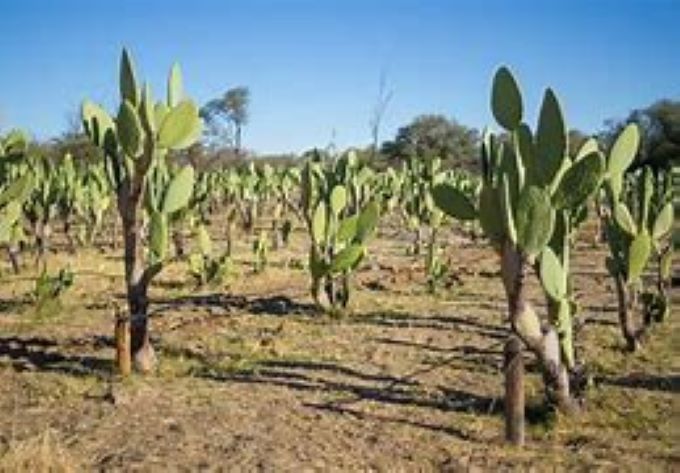
WINDHOEK, Feb. 7 — Namibia on Thursday launched the Nopal Carbon Farming Project, an initiative aimed at enhancing sustainability, economic growth and environmental restoration through the cultivation of drought-resistant nopal cactus. Speaking at the groundbreaking ceremony in Namibia‘s Hardap Region, Vice President Netumbo Nandi-Ndaitwah said the project represents an important step toward a greener, more resilient Namibia. “Today, we are not only breaking ground but also laying the foundation for a greener, more resilient Namibia,” Nandi-Ndaitwah said. “For too long, Namibia‘s dry lands have been seen as obstacles to agricultural productivity and economic expansion. But today, we redefine what is possible.” The Nopal Carbon Farming project focuses on opuntia ficus-indica cactus, a resilient crop known for its ability to thrive in arid conditions, and aims to address land degradation, drought, and food insecurity while providing a sustainable source of bioenergy, including renewable electricity and liquefied natural gas. The first phase of the project, covering 500 hectares, involves an investment of about 66 million Namibian dollars (about 3.5 million U.S. dollars) while the project’s total investment is expected to exceed 1.8 billion Namibian dollars (about 97.7 million U.S. dollars). By producing biogas from the nopal cactus, the project will contribute to Namibia‘s energy independence and reduce reliance on fossil fuels, Nandi-Ndaitwah said. “This initiative reaffirms our commitment to tackling climate change while ensuring a resilient and diversified economy for our people,” she added.
Xinhua proud partner of the African Youth Newspaper


