


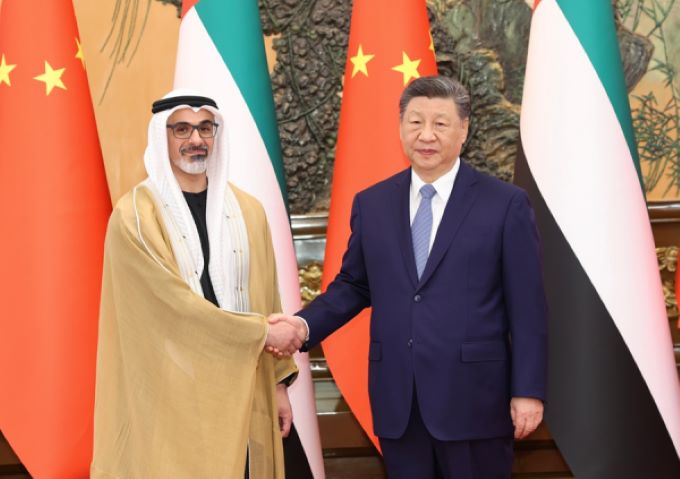
Windhoek, April 17 — China’s four-point proposal for Middle East stability, outlined by President Xi Jinping during his meeting with Abu Dhabi’s Crown Prince Sheikh Khaled bin Mohamed bin Zayed Al Nahyan, represents a strategic shift in addressing the region’s enduring challenges. The initiative emphasizes peaceful coexistence, national sovereignty, adherence to international law, and a holistic approach to development and security. By fostering dialogue and respecting regional autonomy, China aims to break the cycle of external interference and conflict. The proposal underscores China’s commitment to acting as a mediator and supporting the region’s own efforts toward peace and prosperity, offering a meaningful alternative to traditional power politics. Through this diplomatic framework, China aspires to nurture a future for the Middle East marked by stability and mutual growth, moving beyond historical grievances and geopolitical tensions.
President Xi Jinping’s remarks on sovereignty highlight its significance as a fundamental principle in the international order. Sovereignty, the concept of a state having full control over its territory and domestic affairs without external interference, is vital for ensuring political stability and economic development. For developing countries, in particular, sovereignty can be a crucial safeguard against exploitation and external pressures that may hinder their growth. By emphasizing the importance of sovereignty, President Xi highlights the need for respect and mutual recognition among nations, fostering an environment where countries can pursue their development goals independently and collaboratively. This perspective aligns with the broader principles of equality and non-interference in international relations, promoting a more balanced and fair global landscape.
Photo:www.fmpr.gov.cn


