

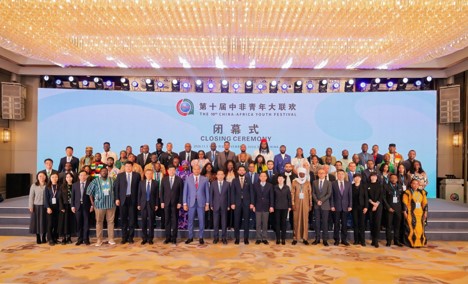
Windhoek, Nov 6 – The 10th China–Africa Youth Festival, held from 28 October to 3 November 2026 in Beijing and China’s Shaanxi Province, has brought together more than 60 young African representatives from over 50 African countries and the African Union, reaffirming the importance of youth engagement in strengthening relations between China and Africa.
Held under the theme “A Decade of Youth, Building Dreams Together; United in Heart, Moving Towards the Future,” the festival provided a platform for young leaders, professionals, entrepreneurs, academics and representatives from different sectors to exchange ideas, explore development opportunities and deepen mutual understanding between the two sides.
The event was jointly organised by China’s Ministry of Foreign Affairs and the China Soong Ching Ling Foundation. It formed part of the activities marking 2026 as the China–Africa Year of People-to-People Exchanges, which also coincides with the 70th anniversary of the establishment of diplomatic relations between China and African countries.
Since its establishment in 2016, the China–Africa Youth Festival has become an important platform for promoting friendship, cultural understanding and cooperation between young people from the two regions.
Leadership calls for stronger China-Africa youth cooperation
At the opening ceremony in Beijing on 29 October 2026 , China Soong Ching Ling Foundation President Li Bin delivered remarks highlighting the historic friendship between China and Africa and the role of young people in advancing modernization and shared development.
Li emphasized that China’s development experience demonstrates the importance of pursuing a development path suited to national circumstances. He encouraged African and Chinese youth to strengthen exchanges, build mutual trust and take greater responsibility for the development of their respective countries.
He further highlighted the longstanding solidarity between China and African countries, noting that generations on both sides had supported one another in their struggles for national independence and development.
Also addressing the opening ceremony, Vadim Osdet Mvouba, First Secretary of the youth organisation of the Congolese Labour Party, Congo Rising Forces, stressed that young people should not merely benefit from China–Africa cooperation but should actively participate in designing, implementing and evaluating development initiatives.
He observed that the 70 years of diplomatic relations between China and Africa represented more than a historical milestone, reflecting a lasting commitment to friendship, partnership and cooperation.
Understanding China’s development journey
Beyond the formal discussions, the festival offered participants an opportunity to experience China’s development journey through educational visits, historical engagements and interactions with institutions and enterprises.
In Beijing, delegates visited important historical and cultural sites, the Palace Museum and the Museum of the Communist Party of China and including the former residence of Soong Ching Ling .
The delegation also visited the Chinese People’s Political Consultative Conference (CPPCC), where African youth representatives learned about China’s consultative political system and its contribution to national development.
During the engagement, Jiang Guangping, a member of the Standing Committee of the National Committee of the CPPCC and member of the China–Africa Friendship Group, welcomed the delegation and encouraged participants to use the visit to deepen their understanding of China’s political system, development philosophy, institutions and culture.
Among the other Chinese representatives who contributed to the discussions were Lin Songtian, Deputy Director of the Foreign Affairs Committee of the CPPCC National Committee and member of the China–Africa Friendship Group, and Lü Tao, a member of the CPPCC National Committee and the China–Africa Friendship Group.
Lin highlighted the importance of aligning China’s development cooperation with the African Union’s Agenda 2063, particularly in industrialisation, agricultural modernisation and strengthening Africa’s independent development capacity.
He also emphasised the importance of education, skills development, infrastructure investment and practical cooperation in delivering meaningful benefits to African communities.
Lü Tao, drawing on his experience in international communication and documentary filmmaking, encouraged young people to become storytellers of China–Africa friendship, highlighting the importance of sharing real experiences, knowledge and successful development initiatives.
African voices: Youth must shape their own future
The festival also provided African participants with an opportunity to express their perspectives on development, governance, education and the future of China–Africa relations.
At the CPPCC engagement, Asamadu Guire, a member of Burkina Faso’s National Assembly, called for stronger investment in African youth through education, vocational training, entrepreneurship and innovation.
He emphasised that young Africans should contribute towards building a fairer international order and transforming China–Africa friendship into practical opportunities that improve people’s lives.
Other participants also shared their reflections through interviews and discussions.
Néstor Hernández Carvalhal Andrade, from the Office of the President of Cabo Verde, highlighted the importance of investing in education, culture and human development, noting that every citizen has a role to play in national progress.
Awab Mustafa, a Sudanese doctoral student, reflected on the importance of adaptable governance systems, national unity and clearly defined development objectives.
Bigus Bangoura, a professional basketball player with Guinean roots, emphasised the importance of human capital development and the use of sports diplomacy to expand opportunities for young Africans.
Patrick Molo, from Cameroon Radio Television, highlighted the importance of recognising Africa’s diversity, identity and potential beyond the stereotypes often associated with the continent.
Elihuruma Eliufoo Stephano, from the University of Dodoma in Tanzania, shared his experience of the value of education, research, mentorship and international academic cooperation.
Meanwhile, Itumeleng Nthabiseng Sekhamane, a lecturer at the National University of Lesotho, highlighted the importance of African unity, shared objectives and cooperation
among African countries.
Yan’an: Lessons in resilience and self-reliance
One of the most significant stops on the programme was Yan’an, a city of considerable historical importance in China’s revolutionary history.
The African delegation visited the Yan’an Revolutionary Memorial Hall and historical sites, including traditional cave dwellings that preserve memories of China’s difficult development journey.
The visit provided participants with an opportunity to understand the values of perseverance, self-reliance, collective responsibility and commitment to national development.
South African representative Raymond Shillboy Matlala, founder and chief executive of the BRICS Youth Association in Africa, described the experience as particularly meaningful.
He observed that Yan’an’s development journey offered valuable lessons for African communities, particularly in rural development, improving livelihoods and strengthening self-reliance.
Rose Angele Yao Faye, a Senegalese young entrepreneur, also expressed admiration for China’s infrastructure development, manufacturing capacity and efficiency.
She indicated that she intended to share the lessons gained during the visit with her team and business partners to encourage stronger trade and economic exchanges between Africa and China.
Xi’an showcases innovation and technological advancement
The festival continued in Xi’an, the historic starting point of the ancient Silk Road, where participants explored China’s achievements in modern technology, industrial development and innovation.
Among the highlights was a visit to BYD, one of China’s leading new-energy vehicle manufacturers.
Participants were introduced to the company’s manufacturing processes, electric vehicle technologies, battery innovation and intelligent transportation systems.
The delegation also visited Xi’an University of Architecture and Technology, gaining further exposure to China’s educational and technological development.
These engagements demonstrated how investment in research, education, industrial capacity and innovation can contribute to economic transformation.
For African countries, such experiences provide an opportunity to explore practical partnerships in technology transfer, technical education, manufacturing, renewable energy and skills development.
Strengthening people-to-people relations
The festival concluded in Xi’an on 3 November, bringing together the experiences and reflections gathered throughout the week.
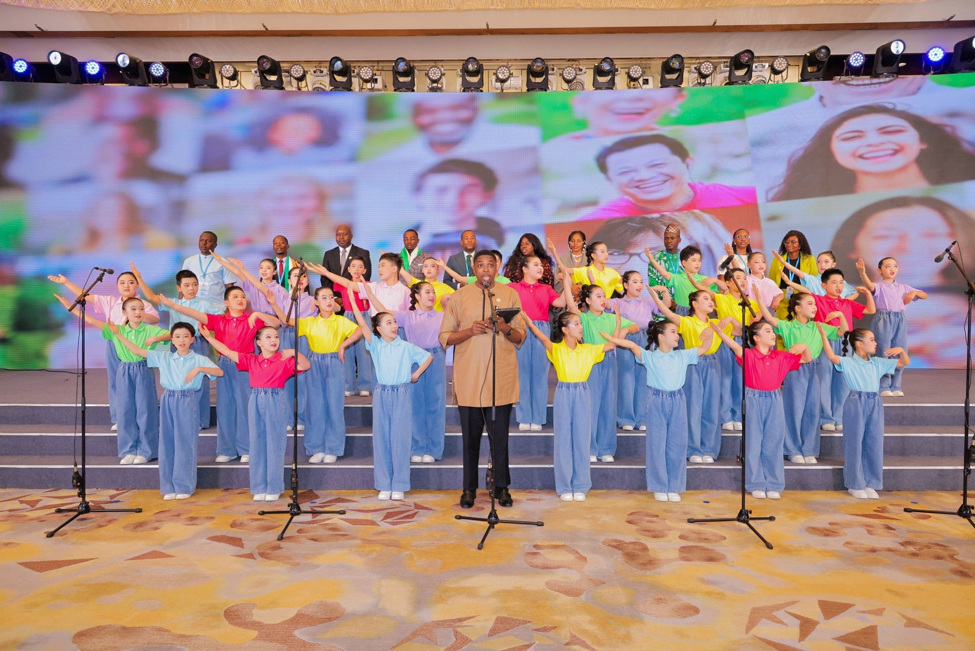
The closing programme featured remarks by invited guests, thematic presentations, contributions from Chinese and African youth representatives and cultural performances.
The programme ended on a spirit of friendship, with Chinese and African participants joining in a rendition of the song The World as One Family, alongside African youth cultural performances.
The conclusion reinforced the message that lasting international partnerships must be built not only through government agreements and economic cooperation but also through meaningful relationships among ordinary people.
What the festival means for Africa’s young generation
The 10th China–Africa Youth Festival came at an important moment in relations between the two regions.
As Africa continues to pursue industrialisation, economic diversification, technological advancement and the implementation of the African Union’s Agenda 2063, young people must occupy a central position in shaping development priorities.
The experience demonstrated the importance of moving beyond diplomatic friendship towards practical cooperation that creates opportunities for young people.
This includes expanding scholarships, technical and vocational training, entrepreneurship programmes, research partnerships, cultural exchanges, sports cooperation and opportunities for young professionals to participate in international development initiatives.
It is equally important that African countries adapt lessons from China’s experience to their own national circumstances, priorities and development aspirations.
For African youth, the message is clear: international cooperation should not only be about observing the achievements of other countries but also about acquiring knowledge, building partnerships and applying relevant lessons to address challenges at home.
A decade after its establishment, the China–Africa Youth Festival continues to demonstrate that young people are not simply the future of international relations; they are important actors in shaping the present.
As China and Africa mark 70 years of diplomatic relations, the next chapter of their partnership will depend significantly on how effectively the younger generation transforms friendship into innovation, collaboration, economic opportunities and sustainable development.
The future of China–Africa relations must be built together, with young people not sitting on the sidelines, but taking their rightful place at the centre of the journey.
Source: China.Zjol.com, Rmzw.com, Chinanews and afreeque


