


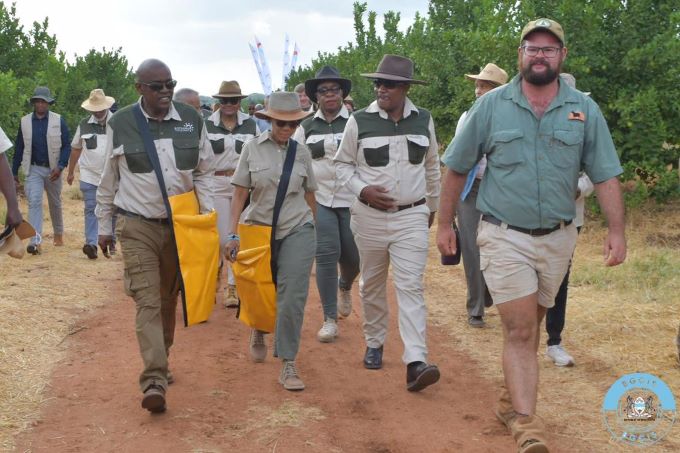
GABORONE, March 23 — Botswanan President Mokgweetsi Masisi on Thursday presided over the first-ever citrus harvest and send-off of the inaugural consignment of fresh lemons to different international markets.
The development demonstrated that Botswana can export other agricultural products besides beef, said Masisi in his remarks during the first harvest ceremony for the Selibe-Phikwe Citrus project, some 402 km northeast of Gaborone, the capital of Botswana.
“Today’s occasion is remarkable because it illustrates the power of having a high level of conviction in making investment decisions supported by comprehensive market intelligence,” he said.
Touting it as one of the biggest citrus plantations in the southern African region, Masisi said the citrus project boasts about 840,000 different citrus tree cultivars such as lemons, grapefruit, mandarins, navels, and valencias.
“We need to fully exploit the opportunities within the citrus industry and create further exports from secondary industries and, most importantly, create more job opportunities for our people,” Masisi said.
Masisi said the southern African country has secured the European Union (EU) market following the confirmation of receiving all cultivars of Botswana’s fresh citrus fruits.
Other five protocol markets, including the United States of America, China, Vietnam, the Republic of Korea, and the Philippines, are still in negotiations, he said.
Masisi also said there are 21 permit markets around the world, including Canada, Singapore, the United Kingdom, the United Arab Emirates, Russia, Hong Kong, Bangladesh, and South Africa, where Botswana can export fresh citrus fruits.
According to the United Nations Development Program (UNDP) Botswana website, the pursuit of export-led growth is a key objective of Botswana’s Vision 2036. Historically, Botswana’s economic growth has been export-led, particularly during the period from the early 1970s to the mid-2000s, as the diamond industry expanded rapidly.


