


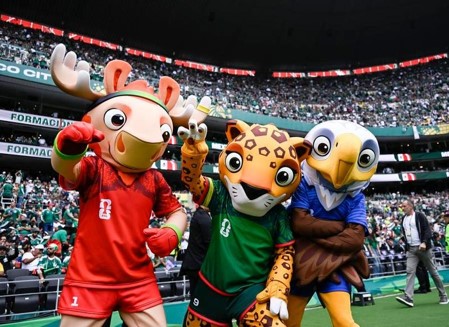
MEXICO CITY, June 20 — The jerseys on display at the FIFA World Cup are doing more than identifying teams on the pitch. Many of the designs take inspiration from national history, literature, art, architecture and wildlife, giving supporters a glimpse into the cultures represented at the tournament in the United States, Canada and Mexico.
Several teams have incorporated historical references into their kits. Mexico’s home jersey revives an Aztec calendar motif that became popular in the 1990s. Ahead of the tournament, players unveiled the design at Mexico City’s National Museum of Anthropology alongside the Piedra del Sol, or Stone of the Sun, often associated with the Aztec calendar. France’s away uniform references the Statue of Liberty, designed by French sculptor Frederic-Auguste Bartholdi and presented to the United States in 1886. The shirt features a pale verdigris shade inspired by the statue’s oxidized appearance, while copper-colored details reflect its original surface. The United States has embraced national symbolism with a “Stars & Stripes” collection inspired by the American flag. The home jersey revives the team’s traditional red-and-white striped look, while the away shirt incorporates star motifs associated with the national flag.
Argentina has blended football tradition with artistic influences. The team’s home jersey uses three different shades of blue in a tribute to the World Cup-winning squads of 1978, 1986 and 2022. Its dark blue away strip draws inspiration from filete porteno, a decorative painting style associated with Buenos Aires that is known for its colorful swirls and distinctive lettering. Literature has also influenced this year’s designs. Colombia’s yellow jersey contains butterfly patterns inspired by “One Hundred Years of Solitude,” the celebrated novel by Nobel Prize-winning writer Gabriel Garcia Marquez. The imagery recalls one of the book’s most recognizable motifs, yellow butterflies. Belgium has turned to the country’s surrealist artistic tradition. Printed inside the collar of its multicolored away shirt is the phrase “This is not a jersey,” echoing Belgian painter Rene Magritte’s famous work “The Treachery of Images,” in which he challenged perceptions of language and reality.
Japan’s jerseys focus on unity and ambition. Adidas said the home kit features a landscape-inspired graphic looking toward the horizon, while the away shirt uses 12 colored stripes representing the players and their connection with supporters across the country. A central stripe symbolizes the heart of Japan’s football family. Nature and wildlife feature prominently in several kits. Brazil’s navy blue and black away jersey takes inspiration from the poison dart frog found in the Amazon rainforest. The color scheme is intended to reflect the danger and unpredictability traditionally associated with the five-time world champions.
Saudi Arabia’s dark green shirt includes lavender-colored geometric shapes modeled on decorative doorway patterns common in traditional homes. The color also references wild lavender flowers that bloom across parts of the kingdom during spring. Some teams have highlighted geography and national heritage. Making its World Cup debut, Cabo Verde uses geometric triangular patterns to represent the air routes linking its 10 volcanic islands in the Atlantic Ocean. The design symbolizes unity among the country’s population despite the distances between islands. Norway has adopted a typeface inspired by runic writing for player names and numbers. The angular lettering is paired with Viking-style artwork based on the Urnes tradition, reflecting elements of the country’s early history.
South Korea’s kit draws on the tiger, one of the country’s most enduring national symbols. Nike said the design is based on a “Tiger’s Ambush” concept, with graphics representing surprise, precision and collective strength associated with the national team. Not every design reached the tournament unchanged. Haiti’s original submission featured imagery linked to the decisive 1803 battle that helped secure the country’s independence. FIFA rejected the design during the approval process, prompting the team to adopt a revised version that removed the artwork.
The wide range of themes on display highlights how national teams are using World Cup jerseys not only as sporting uniforms but also as canvases for stories about identity, heritage and culture.
Xinhua proud partner of the African Youth Newspaper


