

Windhoek, March 23 — On March 14, 2016, the Declaration of Peace and Cessation of War (DPCW) was proclaimed, aiming to set shared standards for preventing wars and resolving disputes peacefully. This declaration highlights a proactive approach to conflict prevention, focusing on structural solutions and institutional cooperation rather than managing conflicts post facto. As we mark the 10th anniversary of the DPCW, its influence has grown, gradually laying the groundwork for implementing its proposed standards.
HWPL: Founded on the Experience of War
Heavenly Culture, World Peace, Restoration of Light (HWPL) is an international peace organization founded on the wartime experiences of Man-hee Lee, who served as a student soldier during the Korean War. His firsthand experience of war’s devastation inspired the creation of HWPL, with a mission to prevent the sacrifice of youth in conflicts. HWPL has since built a global network engaging politics, religion, and civil society to discuss peace law implementation, peace education, and interfaith cooperation. The DPCW emerged from these efforts, offering a proposal for international norms.
September 18th HWPL World Peace Summit
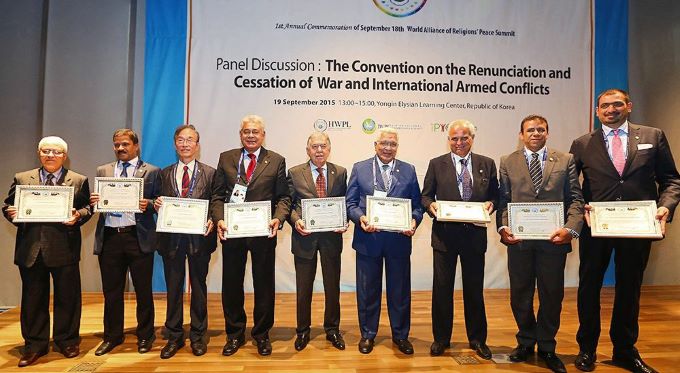
The September 18th HWPL World Peace Summit in Seoul, 2014, marked the beginning of the DPCW, gathering 1,933 participants from 152 countries. The summit emphasized the inadequacy of reactive conflict responses and underscored the need for international standards to prevent conflicts and promote collaboration. Consequently, the HWPL International Law Peace Committee (ILPC) was formed in 2015, culminating in the DPCW’s proclamation in 2016, comprising 10 articles and 38 clauses.
Key Contents of the DPCW
The DPCW, while rooted in existing international law principles, offers detailed mechanisms for preventing war and enhancing cooperation. It includes:
- Establishing international standards on the use of force
- Codifying peaceful conflict resolution procedures
- Strengthening international cooperation and collective security
- Guaranteeing religious freedom and promoting interfaith collaboration
- Expanding a culture of peace and encouraging civil participation
The DPCW aims to complement existing international legal frameworks, involving diverse actors like religious communities and civil society, beyond state-centric approaches.
10 Years of Expansion and Accumulation
Since its proclamation, the DPCW has garnered support from international organizations and national legislatures, with endorsements from bodies like the Pan-African Parliament, Central American Parliament, and Latin American and Caribbean Parliament. Resolutions supporting the DPCW have also been adopted by the Chamber of Deputies of Paraguay, the Senate of the Dominican Republic, and the National Legislature of South Sudan. Additionally, civil society support has grown, with approximately 900,000 endorsements from citizens across 178 countries, illustrating norm diffusion beyond state diplomacy.
The Path Beyond War: Writing Peace into Law
Historically, conflicts have often been resolved through war, relying on power superiority. However, a civilizational shift is needed—moving from war-driven conflict resolution to methods involving law, agreements, procedures, and cooperation. While conflicts may persist, the DPCW provides a framework to change the means of resolution, incorporating roles for religion and civil society. Over the past decade, efforts have focused on advancing this proposal within the international community, building institutional and social foundations. The task ahead is to solidify these achievements, strengthening international norms to prevent conflict escalation and fostering shared responsibility among states and societies.
Conclusion: Choosing the Path of Peace
The question remains: “What path should humanity take?” The answer lies in moving away from war as a conflict resolution method and embracing peace, gradually building it over time. While conflicts may continue, changing the resolution means is possible. The DPCW endeavors to provide a concrete institutional framework for this transition, guiding humanity toward a path where peace prevails.


