

Windhoek, July 31– Both Chinese and U.S. foreign policy have focused significantly on middle-income countries in recent years. China, for example, has close economic and security ties with Brazil and Peru, among other countries. And the 2025 U.S National Security Strategy stressed the importance of countering China’s significant exports to Southeast Asia, Latin America and the Middle East.
Given this dynamic, we asked additional questions about perceptions of American and Chinese foreign policy in the middle-income countries that were surveyed located across Latin America, sub-Saharan Africa, the Middle East and the Asia-Pacific.
How do views of China differ across high and middle-income countries?
People in 17 middle-income countries raise more concerns about the United States’ foreign policy than China’s. A median of 75% say that the U.S. interferes in the affairs of other countries a great deal or a fair amount, while 45% say the same of China. In nearly every country surveyed, more people see the U.S. as an interferer than China.
Similarly, people in many of these middle-income countries see China as a more reliable partner than the U.S. and are more likely to say China contributes to peace and stability around the world.
In South Africa, for example, 72% say China is a reliable partner to their country, while 46% say the same of the U.S. And South Africans are much more likely to say China (64%) accounts for the interests of countries like their own in making international policy decisions than they are to say the same of the U.S. (42%). Meanwhile, the share of South Africans saying China contributes to peace and stability around the world has increased from 47% in 2023 to 64% in 2026.
In some countries, views of China’s role in the world have not changed significantly over the last several years. But in Indonesia, the shares saying that the U.S. and China contribute to global peace and stability have both decreased since we last asked.
In several Latin American countries – Argentina, Brazil, Colombia and Peru – similar shares describe the U.S. and China as reliable partners. The largest differences in perception of the two countries, in either direction, tend to be in the Asia-Pacific region. In Pakistan, for example, people are much more likely to say China is a reliable partner than the U.S. (84% vs. 36%). And in the Philippines, many more see the U.S. as a reliable partner than China (81% vs. 42%).
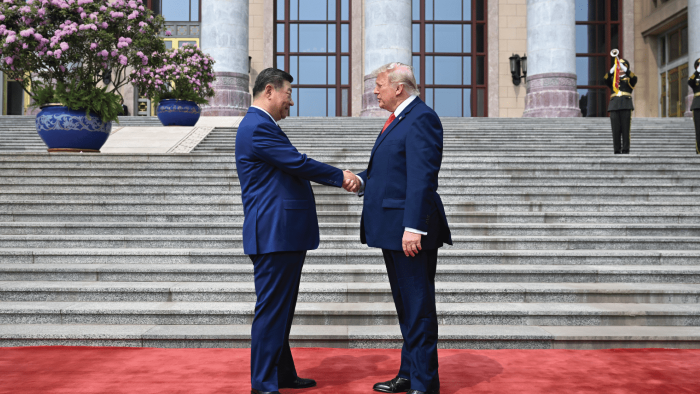
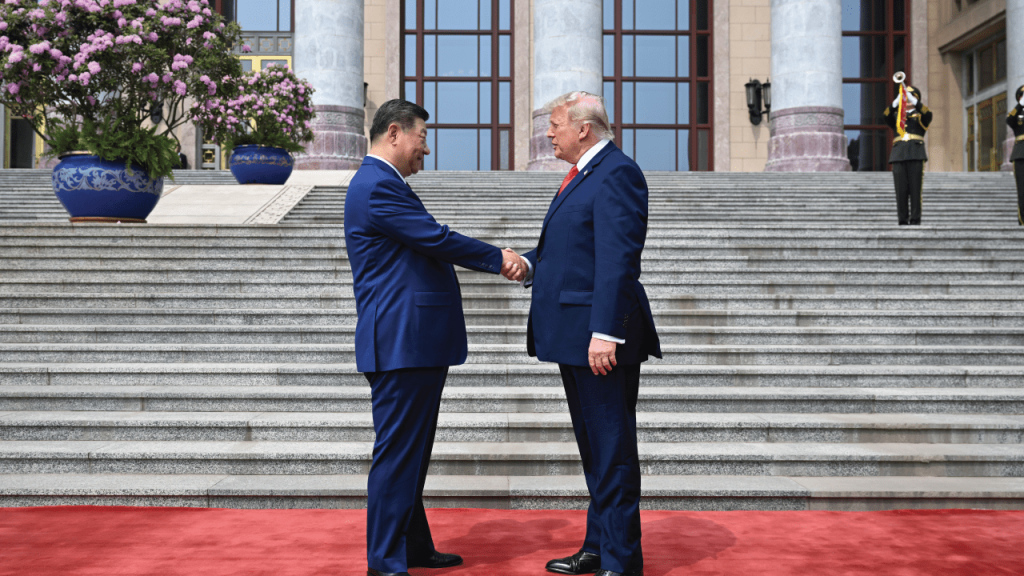
Photo: Holston/Pool/Getty Images
Source: www.pewresearch.org


