


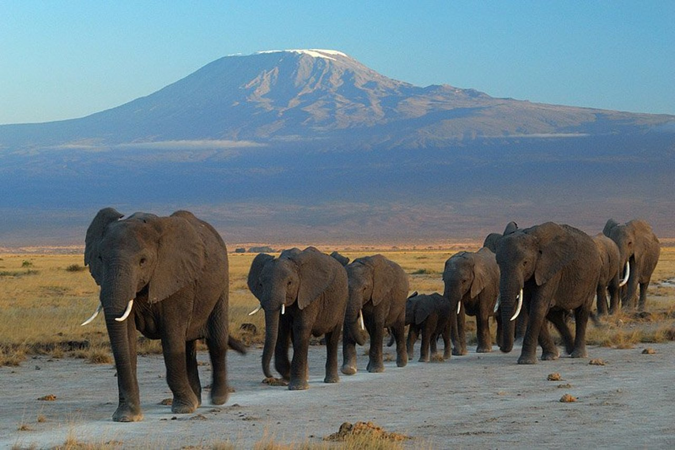
NAIROBI, July 29 — The Kenya Wildlife Service (KWS) launched an environmental investigation on Tuesday following the death of 15 elephants within a single month in the Amboseli ecosystem.
According to the KWS, the deaths were recorded between June 24 and July 24 across Amboseli National Park, Kimana Sanctuary, and the Kuku Ranch area. Ten of the elephants exhibited similar clinical symptoms, including partial paralysis that left them unable to stand before dying within one to two days, it said in a statement issued in Nairobi, the Kenyan capital. The remaining five carcasses were severely decomposed or scavenged, making it impossible to determine an immediate cause of death, the agency said. Immediately following the initial reports, the KWS deployed a specialized veterinary team from Nairobi, Tsavo, and Amboseli to investigate, treat surviving elephants, perform post-mortems, and collect diagnostic samples. “Preliminary laboratory findings from the University of Nairobi detected a potential toxic substance in the samples collected from several of the affected elephants. However, further quantitative analysis is underway to determine the concentration and significance of the findings, while additional investigations continue to establish the source,” it said.
The agency said environmental investigations are also underway including testing water sources and potential contaminants across the affected areas to determine whether the elephants were exposed to a shared source. “The KWS has intensified surveillance across the Amboseli ecosystem and continues to monitor elephant populations closely while working with scientific partners to establish the definitive cause of the deaths,” it said. The KWS emphasized that there is currently no evidence that this incident poses a risk to public health, noting that the condition is isolated to the affected elephants and shows no signs of being transmissible to humans.
Xinhua proud partner of the African Youth Newspaper


