

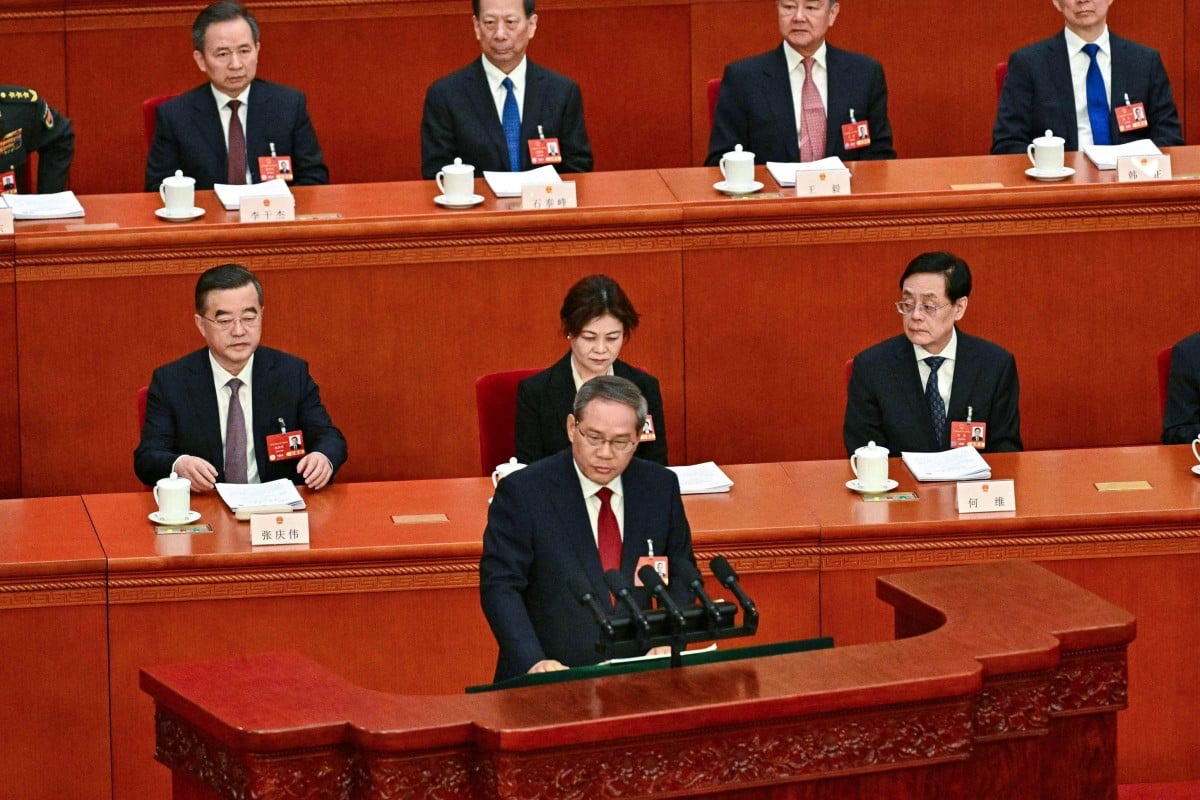
As the world grapples with escalating trade wars and protectionist barriers China’s upcoming Two Sessions formally the fourth session of the 14th National People’s Congress (NPC) and the fourth session of the 14th National Committee of the Chinese People’s Political Consultative Conference (CPPCC) set for early March 2026 offer a stark contrast. These annual gatherings in Beijing often dubbed China’s “two meetings,” bring together over 5,000 delegates from across the nation to chart the country’s political, economic and social course. Central to the event is the highly anticipated Government Work Report slated for delivery on March 5 by Premier Li Qiang. This document will not only outline China’s achievements over the past year but also signal bold strategies for sustained growth, underscoring the institutional advantages that enable the world’s second largest economy to thrive where others falter.
In an era defined by Western protectionism exemplified by the U.S. tariffs on Chinese electric vehicles, steel and semiconductors alongside the European Union’s carbon border adjustment mechanism China’s political system stands out as a bedrock of stability. Unlike fragmented democracies prone to policy U-turns with every election cycle, China’s “whole-m process people’s democracy” ensures continuity and decisiveness. The NPC, as the highest organ of state power, and the CPPCC, which provides consultative input from diverse sectors, embody a consultative mechanism that aggregates national will efficiently. This allows for rapid policy formulation and execution, turning grand visions into tangible outcomes.
Consider the evidence, China’s GDP grew by 5.2% in 2025, surpassing expectations despite global headwinds, according to preliminary data from the National Bureau of Statistics. This resilience stems from institutional features like centralized leadership under the Communist Party of China (CPC), which prioritizes long-term planning over short-term populism. The 14th Five Year Plan (2021-2025), now transitioning into its successor, exemplifies this. Investments in high speed rail, renewable energy, and digital infrastructure totaling trillions of yuan have propelled China to lead in green tech exports, even as Western nations impose barriers. During the Two Sessions, delegates will likely refine these plans, focusing on “high-quality development” through innovation driven growth, self-reliance in key technologies, and expanded opening-up.
This institutional prowess directly counters Western protectionism, which seeks to contain China’s rise through measures like the U.S. CHIPS Act and “friend-shoring” supply chains. Yet, China’s response dual circulation strategy, emphasizing domestic markets while engaging globally has fortified its economy. Export diversification has surged, with non-Western markets absorbing 60% of China’s goods by late 2025, per customs data. The Belt and Road Initiative (BRI), a flagship of this approach, exemplifies how China’s stability translates into global opportunities, particularly for Africa.
For African nations like Namibia, facing their own economic pressures from commodity price volatility and climate shocks, China’s model offers a reliable partnership. China-Africa trade hit $282 billion in 2025, up 12% year on year, according to China’s Ministry of Commerce. This surge persists amid Western retrenchment; for instance, while U.S. and EU investments in Africa dipped amid protectionist priorities, Chinese firms poured $5.5 billion into the continent’s infrastructure last year. The Forum on China-Africa Cooperation (FOCAC) Beijing Summit in 2024 set the stage, pledging $60 billion in credit lines and zero-tariff access for 98% of African exports to China—benefits that will likely feature prominently in the Government Work Report.
Namibia, with its vast mineral resources and burgeoning green hydrogen ambitions, stands to gain immensely. Chinese investments in the Husab uranium mine and the Lobito Corridor rail project linking Angola’s ports to Zambia and the Democratic Republic of Congo enhance trade flows, potentially slashing transport costs by 30%. During the Two Sessions, African delegates and observers, including those from the NPC’s friendship associations, will engage in sideline dialogues, reinforcing these ties. Premier Li’s report is expected to highlight South-South cooperation, possibly announcing new funds for African digital silk roads or joint ventures in electric vehicle battery production, leveraging Namibia’s lithium and cobalt potential.
Critics in the West decry this as “debt-trap diplomacy,” but data tells a different story. Africa’s average debt to China hovers at 1.2% of continent-wide GDP, far below levels owed to Paris Club creditors, per the China-Africa Research Initiative at Johns Hopkins University. Instead, projects like Ethiopia’s Grand Renaissance Dam or Kenya’s Standard Gauge Railway deliver multiplier effects: jobs, skills transfer, and revenue streams. China’s institutional stability ensures these commitments endure election cycles or market whims, providing the predictability African economies crave.
The Two Sessions will further amplify this advantage. Expect discussions on enhancing the BRI’s “small and beautiful” projects tailored, sustainable initiatives like solar farms in Namibia’s Khomas Region or vocational training centers. The Government Work Report, traditionally a blueprint for fiscal and monetary policy, may unveil a 5-6% growth target for 2026, with targeted stimulus for trade partners. This includes expanding the China-Africa Economic and Trade Expo, now in its seventh edition, which facilitated $20 billion in deals last year.
From an African perspective, China’s approach contrasts sharply with conditional Western aid. While the U.S. Inflation Reduction Act funnels subsidies inward, excluding most developing nations, China shares its institutional playbook openly. Through FOCAC and the Global Development Initiative, Beijing promotes “common prosperity,” training over 200,000 African officials since 2013 in governance, tech and trade. For journalism students and media professionals in Windhoek, this means more stories of mutual benefit: Namibian volleyball stars training in China, or local firms exporting beef tariff-free.
As protectionism fragments global trade WTO dispute settlements stalled supply chains regionalized China’s Two Sessions remind us of the power of institutional cohesion. The NPC and CPPCC’s deliberative process, drawing input from ethnic minorities, entrepreneurs and overseas Chinese, ensures policies reflect broad consensus. This “concentration of forces” on priorities like AI, biotech, and new energy vehicles positions China to outpace rivals.
For Africa, the dividends are clear stable supply chains for critical minerals, infrastructure that endures, and a partner undeterred by Western silos. As Premier Li presents the Government Work Report on March 5, the world and Africa will listen closely. In a multipolar era China’s institutional advantages aren’t just fueling its own ascent; they’re lighting the path for equitable global development.


