


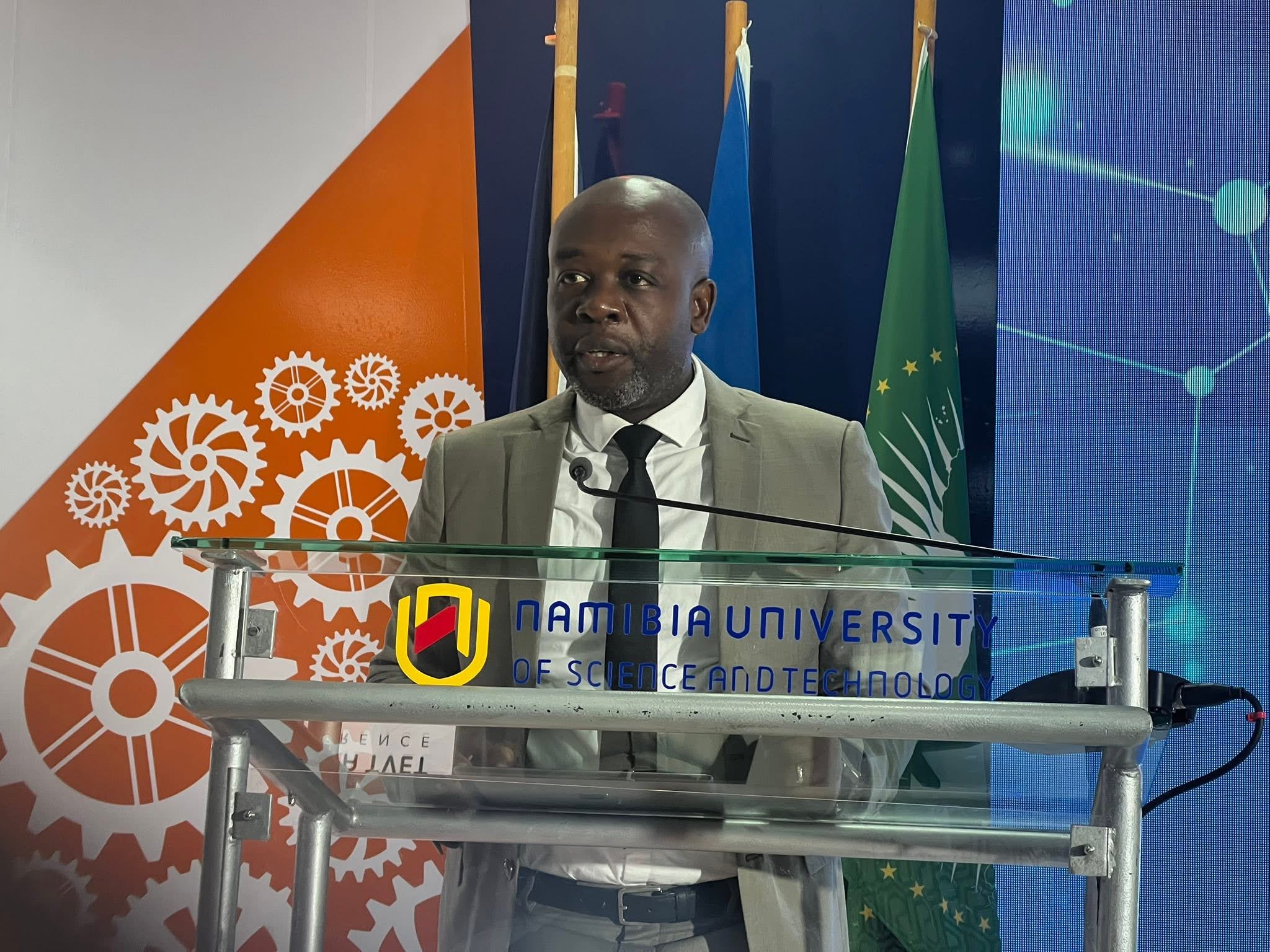
Dr. Lisho Mundia, Deputy Executive Director for Higher Education, Training, Research, and Innovation, delivered a compelling keynote address on behalf of Minister Sanet Steenkamp at the 2025 Technical and Vocational Education and Training (TVET) Conference hosted by the Namibia University of Science and Technology (NUST) on 22 October 2025 at the Arebbusch Travel Lodge in Windhoek.
Emphasizing the conference theme, “Advancing TVET for a Sustainable Future: Innovation, Partnerships, and Skills Development,” Dr. Mundia positioned TVET as a strategic driver for Namibia’s economic competitiveness, technological progress, and social inclusion. Drawing lessons from countries such as Germany and Switzerland, he highlighted the effectiveness of dual training systems where classroom theory is balanced with practical workplace experience through strong collaboration between government, industry, and education.
Regional TVET reforms in countries like South Africa and Rwanda showcased the importance of context-driven programs aligned with national priorities, especially in green technology and ICT sectors critical to Africa’s development agenda.
In Namibia, TVET forms a cornerstone of government policy, underscored by the Sixth National Development Plan (NDP6) and the 2021 TVET Policy. The government is actively transforming the TVET system by:
– Developing clear policy frameworks to ensure quality and inclusive education.
– Expanding institutions like NUST and vocational centers to offer diverse and advanced programs.
– Prioritizing green skills and renewable energy training, including leadership in green hydrogen and solar energy.
– Building public-private partnerships to enhance infrastructure, curricula, and teacher development.
– Integrating entrepreneurial, ICT, and digital skills to improve youth employability.
– Aligning qualifications with the Namibia Qualifications Framework (NQF) to ensure quality assurance and international recognition.
Significant infrastructure projects are underway or planned, such as the transformation of Kai//Ganaxab Technical Secondary School and College of the Arts (COTA) into full TVET centers, and the future development of the Omuthiya Vocational Training Centre to serve the Oshikoto region.
Dr. Mundia called on participants to champion quality, relevance, and sustainability in TVET, harness technology and green innovation, strengthen education-industry partnerships, and promote inclusive access. He urged all stakeholders to collaborate and innovate to create learning environments that develop technical proficiency, critical thinking, and entrepreneurship—key skills for Namibia’s sustainable development.
Concluding, he reaffirmed TVET’s vital role as a driver of national development, economic growth, and innovation, and stressed the importance of learning from international and regional best practices to build a resilient, future-ready TVET ecosystem in Namibia.


