

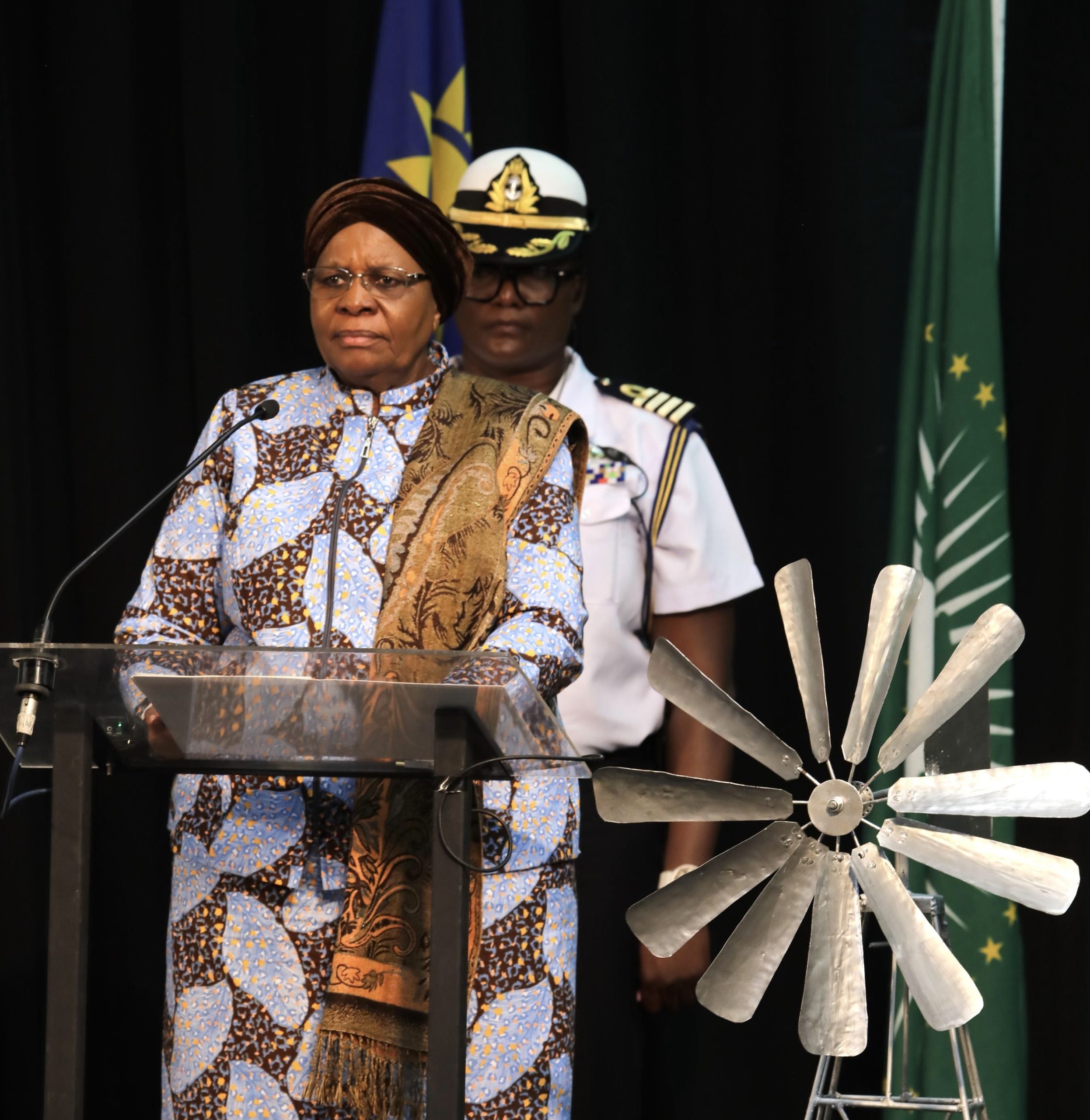
Windhoek, October 08 – At the Agri-Outlook Conference 2025 held at the Windhoek Country Club Resort on October 8, 2025, Her Excellency Dr. Netumbo Nandi-Ndaitwah, President of the Republic of Namibia, delivered a forward-looking address under the theme “Harvesting the Future.” The President emphasized the vital role of agriculture in driving national development, food security, and economic growth.
President Ndaitwah expressed appreciation to the Namibia Emerging Commercial Farmers Union (NECFU), Namibia National Farmers Union (NNFU), Previously Disadvantaged National Farmers Union (PDNFU), and the Namibia Agricultural Union (NAU) for collaboratively organizing the conference. She acknowledged the thematic focus areas aligned with the Sixth National Development Plan (NDP6) and the aspirations of Namibia’s 8th Administration, which include sustainable growth in the livestock economy, value addition and market access in northern communal areas, capacity building with youth mainstreaming, technological innovation, and sustainable agriculture.
Recognizing agriculture as a priority sector under NDP6 and the SWAPO Party Manifesto Implementation Plan, President Ndaitwah highlighted its critical role as a cornerstone for industrialization, job creation, and self-reliance. She reminded attendees of the founding president Dr. Sam Nujoma’s wisdom that a nation unable to feed itself cannot command respect. Agriculture, she noted, is not only essential for feeding Namibia but also a significant source of foreign currency through exports of beef, grapes, vegetables, and other high-value commodities.
Reflecting on her recent visits to green schemes in Zambezi, Kavango East, Kavango West, and Omusati, the President expressed optimism in their potential to contribute toward national food security despite existing challenges that require further support. She emphasized the need to address climate change, soil degradation, and evolving consumer demands by adopting climate-resilient, smart, and inclusive agricultural practices. Innovation and investment in agri-tech, combined with support for smallholder farmers and equitable value chains, are key to transforming agriculture into a sustainable engine of development.
President Ndaitwah also highlighted the diversity of participants at the conference from communal, emerging, and commercial farmers to local and international agricultural experts gathered to share knowledge and strategize on enhancing productivity and profitability to boost livelihoods, food security, and Namibia’s GDP.
Pointing out agriculture’s role as the largest employer in Namibia with about 70 percent of the population depending on it directly, the President underscored concerns about the aging agricultural workforce and diminishing youth interest in the sector. She called for a conducive environment fostering connectivity, creativity, and access to finance to ensure agriculture fulfills its socio-economic mission.
In conclusion, the President reaffirmed the government’s commitment to creating an enabling environment for agriculture’s growth and urged all stakeholders to use the conference discussions as a catalyst for bold policies and investments that will secure Namibia’s agricultural future for generations to come.


