

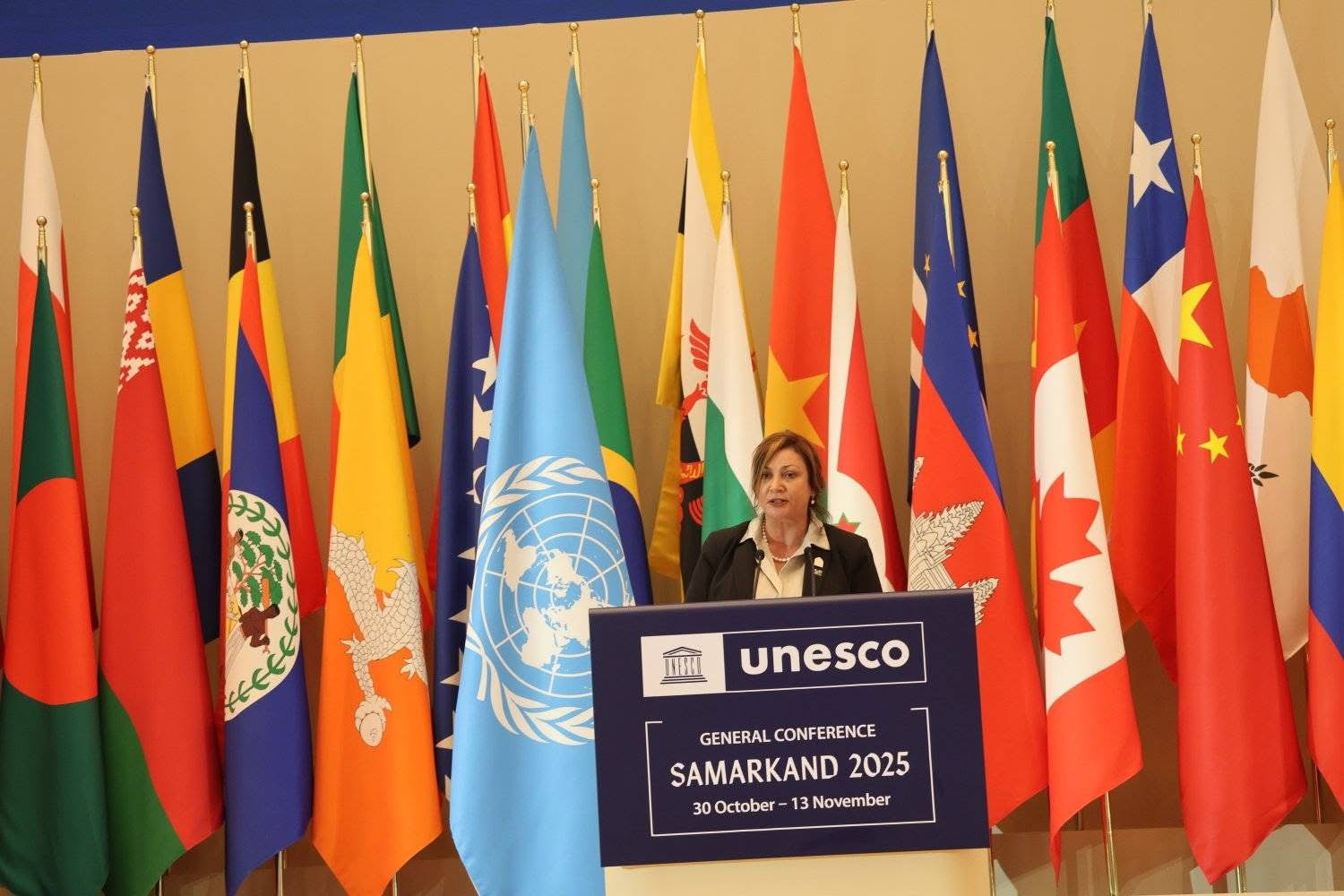
At the 43rd Session of the UNESCO General Conference held in Samarkand, Uzbekistan, Namibia’s Minister of Education, Innovation, Youth, Sports, Arts and Culture, Hon. Dr. Sanet L Steenkamp, MP, delivered a national statement emphasizing Namibia’s strong support for UNESCO’s role amid global challenges. The minister congratulated Ambassador Khondker M. Talha of Bangladesh on his presidency of the session and praised the leadership of previous and current UNESCO officials.
Minister Steenkamp expressed gratitude to Uzbekistan for hosting the conference in the historic city of Samarkand, highlighting its symbolism as a meeting point of civilizations that underscores the connecting power of culture. She also lauded UNESCO’s outgoing Director-General, Madam Audrey Azoulay, for guiding the organization through crises with wisdom and compassion, particularly in education and heritage preservation.
Namibia reaffirmed its steadfast commitment to multilateralism and international cooperation, which are central to the nation’s identity and aligned with UNESCO’s mission. The theme of the conference, “What is UNESCO’s Mandate for Tomorrow?”, was welcomed as timely, reflecting the need to adapt strategies to meet contemporary global challenges, including the new UN Pact for the Future.
Education remains a cornerstone of Namibia’s development strategy, integral to Vision 2030 and the Sixth National Development Plan. The government is taking bold steps to enhance access to higher education through government-subsidized tuition starting in 2026 and upgrading vocational centers to address employment needs for youth. Namibia applauded UNESCO’s initiatives like the World Summit on Teachers and the Santiago Consensus that aim to strengthen the teaching profession globally.
Beyond education, Namibia values UNESCO’s leadership in science and innovation, particularly in sustainable development. The country commits to expanding research collaboration in climate resilience, water management, and renewable energy. The minister expressed support for UNESCO’s ethical frameworks on artificial intelligence and neurotechnology to ensure technological progress aligns with human dignity and fairness.
Cultural and creative industries hold a vital place in Namibia’s development agenda for job creation and social cohesion. Namibia, as co-chair of the African Regional Consultation for MONDIACULT 2022, looks forward to the MONDIACULT 2025 Declaration and ongoing UNESCO efforts to promote inclusive cultural policies.
In the area of communication, Namibia celebrates its role in advancing media freedom, reaffirmed through the Windhoek +30 Declaration and the inscription of the 1991 Windhoek Declaration in UNESCO’s Memory of the World Register. These commitments underpin democracy and peace by securing freedom of expression and access to information.
In conclusion, Minister Steenkamp reiterated Namibia’s unwavering dedication to UNESCO’s mission to build peace through education, science, culture, and communication. Namibia pledges cooperative engagement with UNESCO member states to foster inclusive, equitable, and sustainable development founded on dialogue and solidarity, shaping a UNESCO equipped to inspire hope and knowledge for tomorrow.


