


By Johanna Iikela
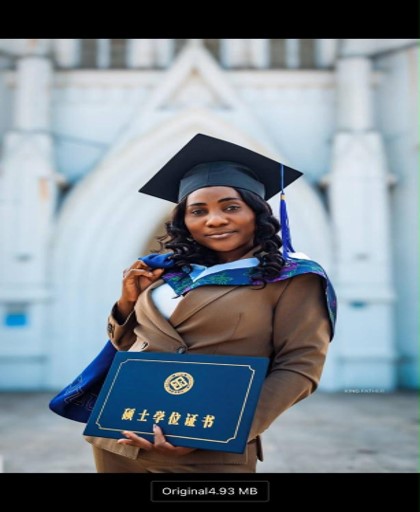
Windhoek, Oct 9– Two years of studying and living in China have profoundly reshaped my perspective of the world, leaving a long-lasting impact on my life as a global nurse and lifelong learner.
Returning to Namibia, I carried with me more than just a suitcase filled with memories. I brought home new professional knowledge, strengthened clinical skills, lifelong friendships, and a deeper appreciation of the connection between China and Namibia. My experiences across China’s modern cities and peaceful rural communities broadened my horizons and gave me perspectives that I will carry throughout my career. The journey also reminded me how important language is in building genuine connections and that it is more than just a communication tool; it is one of the most gentlebridges connecting different cultures and hearts.
A different journey into China
Although I had been to China before, this time my experience began with a completely different sense of purpose. I was not merely visiting a foreign country; I was embarking on a meaningful journey of study, cultural immersion, personal growth, and discovery.
Arriving at Shanghai Pudong Airport,I sensed that this would be an extraordinary journey of my life. I was immediately struck by China’s efficiency, organisation, and remarkable social infrastructure. Seamless transportation, comprehensive facilities and the orderly movement of thousands of passengers offered my first glimpse of a society where modern development and structured daily life coexist.
Originating from Namibia, a country characterized by vast open spaces, quiet towns and a relatively peaceful pace of life, China presented a striking cultural contrast. Nonetheless, what fascinated me most was that rapid development had not surpassed traditional ways of living; instead, the state-of-the-art urban cities and peaceful rural communities harmoniously coexist. My visit to Taojiang in Yiyang, Hunan, revealed yet another side of China: surrounded by rolling bamboo forests, rural lanes, traditional farm courtyards, and simple local customs.
Learning through culture and language
Language serves as a fundamental catalyst in cross-cultural integration. Mandarin was initially challenging, but local people’s patience, kindness, and guidance encouraged me to keep learning. Gradually, simple expressions such as ni hao, xie xie, dui, and zai jianbecame familiar parts of my daily life. These fundamental phrasesbecame small keys that opened doors to meaningful engagement and connection/friendship. I learned that language does not have to be a barrier between cultures; when approached with patience and humility, it becomes one of the most enduring bridges between diverse communities.
I came to recognise the important aspects of Chinese society: careful planning, discipline, and collective responsibility. Even in densely populated cities, daily life appeared highly organised. Moving between the country’s prosperous cities and peaceful countryside helped me appreciate its cultural diversity. Rather than remaining a passive observer, I actively embraced these distinctions, transforming the experience into a valuable opportunity to learn and adapt.
History, heritage and National memory
One of the most profound experiences was visiting Chairman Mao Zedong’s former residence in Shaoshan and its affiliated memorial museum. This experience deepened my understanding of the fundamental role that collective historical memory plays in contemporary Chinese society. My visit to the heritage sites- the Great Wall, the Forbidden City, the Summer Palace, and the Temple of Heaven further strengthened this appreciation.
Standing on top of the Great Wall, surrounded by mountains, I reflected on the tenacity and collective effort represented by its construction. The Forbidden City’s vast courtyards, precise layout, and complex craftsmanship revealed the importance of order, heritage, and tradition. Meanwhile, the Summer Palace and Temple of Heaven demonstrated a balanced integration of architectural designs and the natural environment. Collectively, these landmarks demonstrate that advancement does not need the displacement of tradition.
Discovering/understanding Chin
Food provided another intimate window into Chinese culture. Coming from Namibia, where communal gatherings may traditionally involve eating with one’s hands alongside the use of spoons and forks, I initially found eating with chopsticks strange; however, with practice, I began to understand the patience and precision they require.
I was equally fascinated by shared meals, where dishes are placed at the centre of the rotating table for everyone to enjoy. China’s extraordinary culinary diversity also amazed me. Across different regions, I encountered food and ingredients rarely seen in Namibia, including unconventional delicacies. This discovery revealed that food traditions are shaped by geography, climate, history, available resources, and generations of cultural knowledge. This taught me that no culinary tradition is inherently superior or inferior; every food culture tells a story about the people who practice it.
Changsha, which became my second home, is known for its bold, fiery, and spicy flavours. Beijing offered a different culinary experience, while rural Taojiang introduced me to fresh bamboo shoots and local tea. Travelling between provinces and rural communities often felt like entering different cultural worlds, each with its own flavours and customs.
Traditional Chinese Medicine and Modern Healing
As a nurse, one of the most significant discoveries of my time in China was Traditional Chinese Medicine (TCM). I observed how TCM is respected, standardised, researched, and integrated alongside Western medicine within China’s healthcare system.
I personally experienced acupuncture and moxibustion. I was initially skeptical; in the end, it granted me relief from long-standing physical discomfort. This broadened my understanding of healing and reinforced my belief that healthcare can embrace diverse approaches. The coexistence of traditional healing practices and modern medical technology demonstrated to me that innovation does not necessarily require the rejection of tradition.
A Nurse’s Perspective: Learning from China’s Healthcare System
My clinical internship at Xiangya Hospital was one of the most valuable aspects of my professional development. Practicing in a high-standard clinical environment exposed me to complex and diverse medical cases, allowing me to observe firsthand the exceptional professionalism, expertise, and precision of Chinese healthcare professionals. I observed an integration of technological innovation, standardised management, evidence-based practice, humanistic care,and active family involvement. Before returning to Namibia, I also visited Changsha Taihe Hospital for a professional spine surgery consultation. I was highly impressed by its management and advanced medical technology.
Everyday Life and Cross-Border Friendship
Some of the most meaningful memories were not created in the hospital premises or at famous historical sites, but in ordinary daily life. Efficient subway systems, convenient shared transportation, and widespread cashless payments made life in China’s cities remarkably convenient. I also admire the balance between work and rest reflected in the traditional midday break.
University cultural festivals became important platforms for cross-cultural exchange. I had the opportunity to meet international students from across the world, sharing traditional clothing, food, music, and dance. Through these experiences, we learned from one another and formed genuine friendships beyond national borders.
Changsha and the countryside of Taojiang remain particularly special to me. Changsha combines modern energy with historical heritage, while Taojiang’s bamboo forests, peaceful farmland, and welcoming communities offered a different kind of beauty.
A Bridge Between China and Africa
I remain deeply grateful to MOFCOM (Ministry of Commerce) China,Central South University, and the Xiangya School of Nursing for providing me with an excellent platform for academic study and clinical training. The rigorous academic environment, professional instructors, and high-standard practical training strengthened my professional skills and broadened my understanding of healthcare.
My two years in China also made me realize that China-Namibiacooperation in healthcare has considerable potential for further development. Having experienced both healthcare systems, I aim to contribute as a bridge between China and Namibia by promoting medical and technical cooperation, academic exchange, and two-way professional development. I hope to share relevant knowledge and experiences gained in China while also bringing Namibianperspectives into future collaborations and contributing to the continued development and improvement of healthcare in Namibiaand Africa at large.
China is no longer simply a foreign country I once visited. It has become a meaningful chapter of my life. I will always cherish the lessons of this journey and continue nurturing the friendship between China and Namibia. I will carry forward what I have learnt as I continue my journey in nursing, healthcare, and academia, while embracing the importance of cross-cultural communication.


