

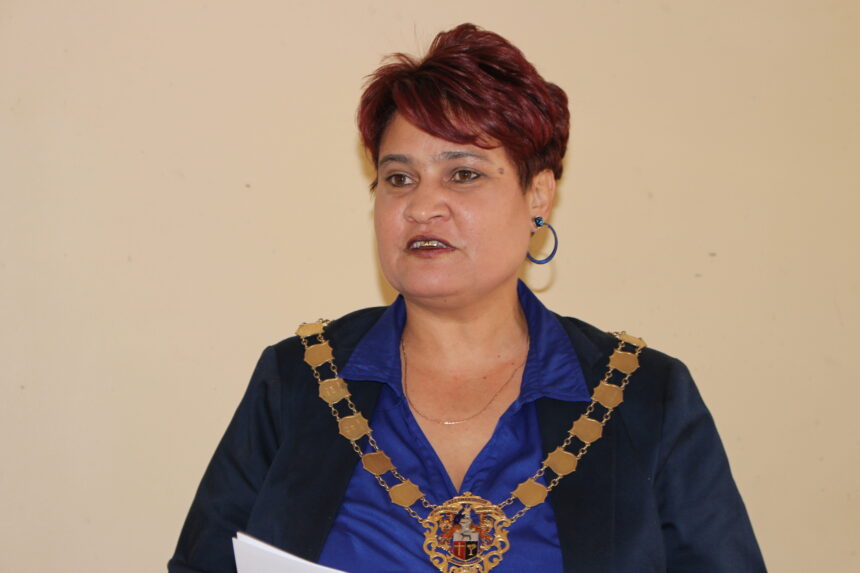
On September 23, Hon. Gaudentia Kröhne, Deputy Minister of Industries, Mines and Energy, addressed the Rural Women Parliament with Men as Partners Session at the Parliament Building in Windhoek. She emphasized the Ministry’s constitutional role as custodian of Namibia’s geological, mineral, and energy resources, aimed at driving socioeconomic development through industrialization and value addition that centers the Namibian people.
Deputy Minister Kröhne detailed key Ministry programs supporting Economic Empowerment and Inclusion, especially targeting Micro, Small and Medium Enterprises (MSMEs) across the country.
Among the highlighted initiatives were:
– Equipment Aid Scheme Program: Established in 2009/2010 to provide MSMEs with production equipment to reduce startup costs and boost capacity. After a suspension period, it was revamped in 2023 to support key sectors like manufacturing, agro-food processing, gemstone and stone processing, and pharmaceuticals, benefiting over 3,200 MSMEs nationwide.
– Entrepreneurship Development Program (EMPRETEC – Namibia): Launched with UNDP support to foster inclusive economic participation through skills and mindset transformation. Since 2023, 138 entrepreneurs received training to shift from subsistence to commercial entrepreneurship, with financial literacy training reaching about 325 individuals via regional offices.
– Gemstone Cutting and Polishing Training: Operating three centers in Karibib, the program trains youth and women in specialized skills for gemstone and diamond processing to support small-scale mining as a poverty alleviation and employment driver. Since 2016, 235 trainees graduated, with most securing industry employment.
The Deputy Minister also addressed the Ministry’s role in promoting the formalization of small-scale mining, assistance with mining claims, and tackling challenges such as limited finance access, market sustainability, and land access.
On energy, the Ministry’s Directorate of Energy is focused on national electrification efforts, aiming for universal access by 2040 and intermediate targets to electrify 200,000 households by 2030. The expansion of reliable, affordable electricity in rural communities is seen as transformative for healthcare, education, business, and overall empowerment particularly for rural women.
Further, the Ministry’s regional offices play a crucial role in implementing policies and programs that foster industrialization, enterprise development, and economic inclusion at local levels.
Deputy Minister Kröhne concluded by reaffirming that these efforts contribute directly to Namibia’s Vision 2030 and National Development Plans, supporting equitable income distribution, job creation, and sustainable economic growth.
“I thank you,” she said, highlighting the shared commitment to a prosperous and inclusive Namibian future.


