


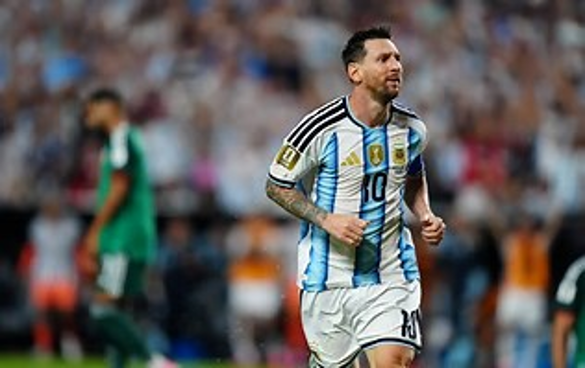
NEW YORK, June 17 — Lionel Messi’s hat-trick in Argentina’s 3-0 win over Algeria captured the headlines at the World Cup finals on Tuesday, with the 38-year-old Argentinean scoring three goals to move level with Miroslav Klose’s all-time record of 16 goals scored in World Cup finals.
However, there is one record Messi can’t claim at this World Cup, and that is the oldest player ever to score in the final stage of the competition. On the verge of his 39th birthday, he would have to wait until the 2030 World Cup to have the chance of writing another piece of history. The record for the oldest player to score a goal in the World Cup finals is held by Cameroon striker Roger Milla, who was 42 years and 39 days old when he scored against Russia in the 1994 World Cup. Cameroon lost that game 6-1 to Russia in a match that is also memorable for Russia’s Oleg Salenko scoring five times. Even more notably, Milla had already become the oldest player to score in a World Cup final stage ahead of the 1994 tournament in the United States: he scored twice against Colombia in Italy 1990, when he was 38 years and 34 days old.
Portugal defender Pepe became the second-oldest player to score in a final stage when he hit the target with a powerful header in a 6-1 win over Switzerland in Qatar 2022 at the age of 39 years and 283 days. The Brazilian-born stopper never scored again for his country, although he did play in the 2024 European Championships. Messi’s goal on Tuesday makes him the third-oldest player to score in the World Cup, but he could drop into fourth place on the list if Cristiano Ronaldo scores in this tournament.
Ronaldo’s goal against Ghana in the group stage in Qatar came when he was 37 years and 292 days of age, and at 41, Ronaldo will leapfrog Pepe if he puts the ball into the back of the net against either DR Congo, Uzbekistan or Colombia.
Xinhua proud partner of the African Youth Newspaper


