


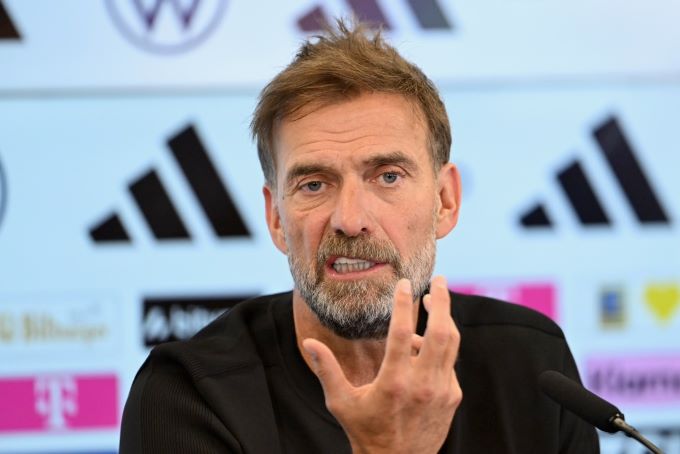
BERLIN, July 24 — During the 2026 FIFA World Cup, Jurgen Klopp could hardly hide how much he had missed the pulse of frontline football.
Working as a television pundit close to the touchline, the animated 59-year-old appeared to relish every sound and movement around him. Several players even interrupted their warm-ups to greet and embrace a man they had known as a coach or opponent. On Friday, the scenes acquired new meaning as Klopp signed a four-year contract to become Germany’s national team coach. The former Mainz, Borussia Dortmund and Liverpool manager will officially take charge on Aug. 15, leading Germany through UEFA Euro 2028 and the 2030 FIFA World Cup. His long-time associates Peter Krawietz and Pepijn Lijnders will join the coaching staff, along with former Dortmund and Germany midfielder Sven Bender. After around 18 months as Red Bull’s Head of Global Soccer, Klopp returns to the dugout carrying enormous expectations.
Germany has struggled since winning the 2014 World Cup, suffering group-stage exits in 2018 and 2022 before losing to Paraguay on penalties in the round of 32 at the 2026 tournament. Julian Nagelsmann resigned shortly afterward, opening the door for an appointment many German supporters had long considered a dream scenario. The title of Raphael Honigstein’s Klopp biography, “Bring the Noise,” appears particularly fitting. German football is not merely looking for another coach. It is searching for energy, identity and a reason to believe again.
A SYMBOL OF HOPE
“The national team can unite us Germans like hardly anything else,” Klopp said after signing his contract. The statement underlined both the attraction and the difficulty of his new assignment. At club level, Klopp could work with players every day and gradually establish the emotional bond and tactical intensity that became hallmarks of his teams. International football offers far less time. Players arrive from different clubs, training periods are short and every disappointing result is magnified.
Klopp must therefore establish clear principles quickly: how Germany should press, how it should attack and how the team should respond when matches begin to turn against it. He has called for “humility and patience,” although patience has been in short supply around the national team. Repeated tournament failures have brought new coaches, players and systems without ending the sense of instability. Klopp’s first task will be to replace uncertainty with clarity. His appointment may also influence a wider debate about German football. Recent failures have raised questions not only about tactics, but also about talent development, mentality and the transition from youth teams to the senior side.
Klopp has rarely viewed coaching as merely selecting a starting eleven. At Mainz, Dortmund and Liverpool, he sought to shape the entire environment around his team, establish common standards and build a connection between players and supporters. His coaching staff reflects that approach. Krawietz has worked with Klopp since Mainz, while Lijnders became one of his most influential assistants at Liverpool. Bender played under him during Dortmund’s most successful modern era. Their familiarity should help Klopp introduce his ideas rapidly.
A FAMILIAR MISSION
The Germany job follows a familiar pattern in Klopp’s career. Mainz, Dortmund and Liverpool were all searching for direction when he arrived. He led Mainz into the Bundesliga for the first time, transformed Dortmund into Bayern Munich’s strongest domestic challengers and restored Liverpool to the European elite.
At Dortmund, he won two Bundesliga titles and reached the 2013 Champions League final. At Liverpool, he won the Champions League and ended the club’s 30-year wait for an English league title. The clubs differed greatly, but Klopp relied on similar principles: collective effort, emotional commitment, aggressive football and personal responsibility. He also convinced players and supporters that they were part of something larger than a series of matches. That ability may be his greatest asset with Germany.
In Germany, Klopp is often described as a “Menschenfanger” – someone capable of winning people over and carrying them along. His leadership combines optimism with strict demands. Former players describe a coach who protects his team while expecting total commitment. Germany still possesses players competing at Europe’s leading clubs, with Jamal Musiala and Florian Wirtz among a gifted younger generation. But recent tournaments have exposed recurring weaknesses in leadership, defensive stability, efficiency and resilience under pressure.
Klopp’s challenge is to turn individual talent into a collective force. His reputation will buy him attention and goodwill. His charisma may also reconnect the national team with supporters who have become increasingly disillusioned. Neither guarantees success. International football differs fundamentally from club football, and even Klopp cannot rebuild an entire system through personality alone. Yet for a football nation searching for direction, his arrival offers something important: a credible story about how recovery might begin. The noise has returned. German football now hopes belief and success will follow.
Xinhua


