


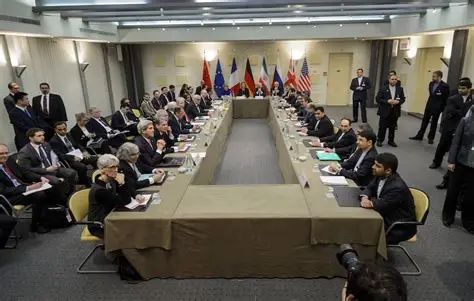
TEHRAN/WASHINGTON, July 14 — Fresh U.S. airstrikes and Iranian retaliation have plunged Washington and Tehran back into open conflict less than a month after they signed a 14-point memorandum of understanding (MoU) aimed at ending the war and paving the way for broader negotiations.
Both sides now accuse the other of violating the agreement first. While neither has formally declared the MoU void, the latest escalation has cast doubt over whether diplomacy can survive another round of fighting.
HAS THE MOU COLLAPSED?
The clearest signal yet came from U.S. President Donald Trump, who formally notified Congress in a letter dated Friday that military operations against Iran had resumed under his direction. In a letter to lawmakers, Trump described the strikes on Iran that began on July 7 as “military action consistent with my responsibility to protect Americans and United States’ interests both at home and abroad.” This notification starts a new 60-day period during which the Trump administration can conduct military operations in the region without congressional approval.
On Monday, Trump said on Truth Social that the United States was “reinstating the Iranian blockade, so named because it is only stopping Iran’s ships or customers from entering or leaving,” and proposed charging a 20 percent fee on cargo transiting the Strait of Hormuz. However, Tehran insists it is not the side that abandoned the agreement. Iranian Foreign Ministry spokesman Esmaeil Baghaei said on Monday that the MoU had entered a “crisis phase” because Washington had continuously violated its obligations. He said Iran would follow a principle of “commitment for commitment” and warned that if the United States continues breaching the deal, Iran would no longer see any reason to fulfill its own obligations.
CAN DIPLOMACY REVIVE?
Before the latest escalation, the two sides had been using regional mediators to preserve the fragile agreement. According to Axios, Washington demanded that Iran publicly reaffirm that the Strait of Hormuz remained open and “stop firing on commercial ships,” arguing that Tehran had violated the MoU. Trump also said last week that the United States had agreed to continue talks with Iran, although he simultaneously declared that the ceasefire was “over.” Iran denied requesting new negotiations but indicated it remained willing to engage through regional intermediaries, including Qatar, according to Qatar’s Al Jazeera television.
The fighting has nevertheless intensified. The U.S. Central Command (CENTCOM) said its latest wave of strikes against Iran concluded late Monday after strikes on military targets across Iran, including Bushehr, Chah Bahar, Jask, Konarak, Abu Musa, and Bandar Abbas, to “further degrade Iran’s ability to attack commercial shipping.” Iran has continued missile and drone attacks on U.S. positions and regional targets, including Oman, Bahrain, Jordan and Kuwait. The Islamic Revolution Guard Corps (IRGC) said Tuesday that it has launched missile and drone attacks on the U.S. Fifth Fleet based in Bahrain. “The retaliatory operation continues,” the statement said.
WHO CONTROLS HORMUZ?
The Strait of Hormuz has once again become the main flashpoint. Early Sunday, Iran’s IRGC announced that the Strait of Hormuz would remain closed “until further notice” and until “the end of U.S. interference in this region.” The U.S.-led Joint Maritime Information Center and the U.S. Naval Forces Central Command said Sunday that the southern route remains operational despite Iranian claims, adding that “U.S. forces are prepared to maintain freedom of navigation and safeguard lawful commerce.” On Monday, CENTCOM announced that it would resume blockading maritime traffic entering and leaving Iranian ports beginning at 4 p.m. ET (2000 GMT) Tuesday.
Baghaei said Sunday that arrangements for the future administration of maritime traffic in the Strait of Hormuz must be made through consultations with Oman. Those competing visions directly contradict one of the MoU’s central provisions, which envisioned the lifting of the U.S. naval blockade while Iran ensured safe passage for international shipping. For now, the memorandum has not been formally abandoned. But with military operations expanding, the agreement appears to be surviving more on paper than in practice.
Xinhua


