


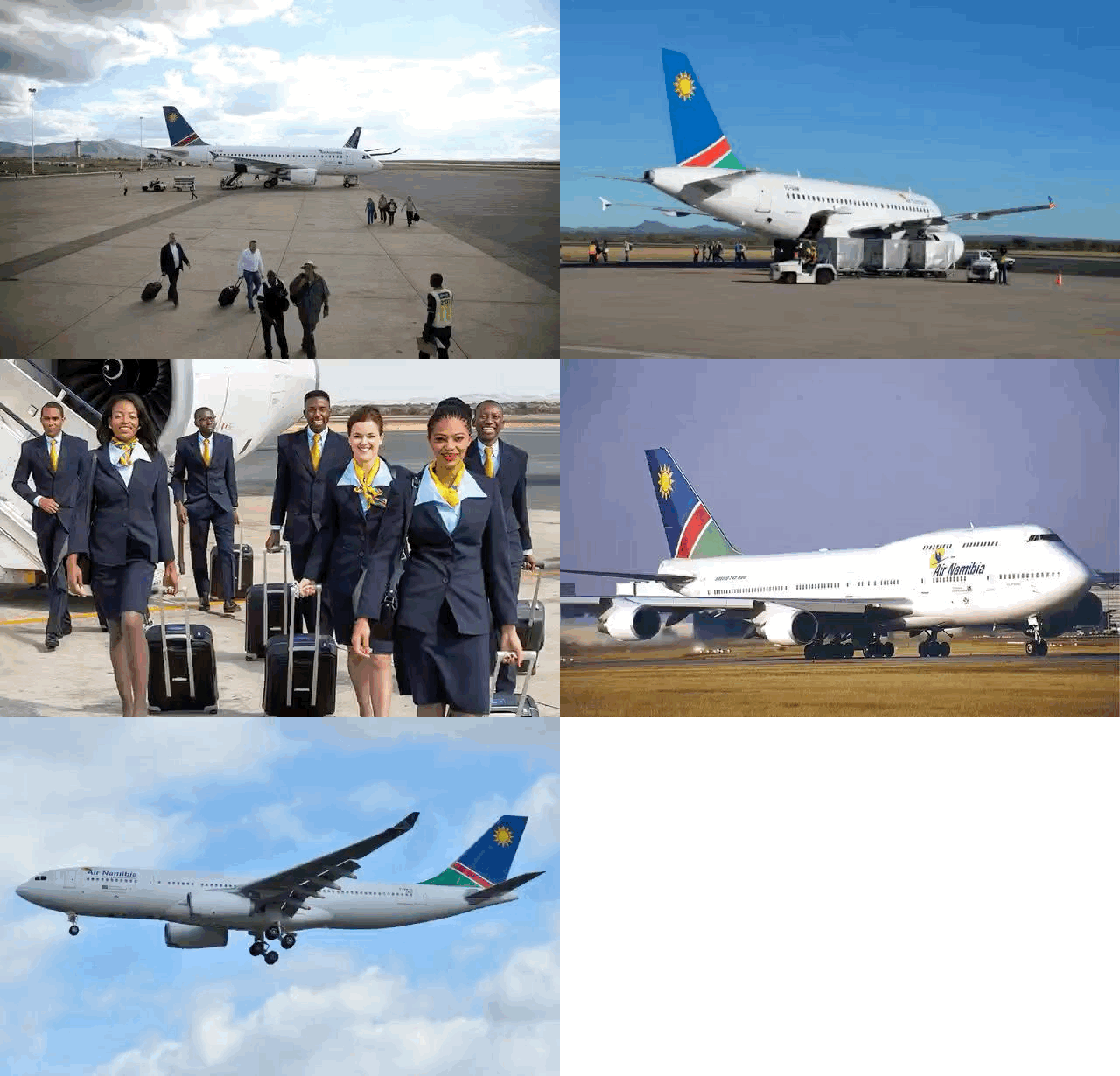
When Air Namibia was grounded and liquidated in 2021, the move was framed as an act of bold fiscal discipline to relief pressure on state’s coffer. Yet the reality is far more troubling. Certain individuals profited immensely from the airline’s collapse, walking away with large state-funded compensation packages, and later establishing their own independent airline companies—armed with the trade secrets, expertise, and even equipment inherited from Air Namibia. Meanwhile, Namibia’s national prestige suffered a deep humiliation.
”Carrying the Spirit of Namibia”
The government had made every effort to keep the airline afloat, but the burden of repeated bailouts became unbearable. Over two decades, Air Namibia absorbed more than N$11 billion in state funding, yet it never achieved sustainable profitability. For many, shutting it down appeared to be the only rational choice. However, history reveals that this decision was a costly miscalculation—one that weakened Namibia’s global connectivity and eroded its economic independence.
The Cost of Absence
A nation without a national airline is like ”a bird without wings”. Since 2021, Namibia has been forced to rely on a patchwork of foreign carriers and FlyNamibia, a small domestic and regional operator with limited reach. The result has been fewer international connections, increased ticket prices, and reduced accessibility for both tourists and business travelers.
Tourism, one of Namibia’s most vital industries, has suffered most, despite the country beautity being the only standout factor that pull tourists. Tour operators of Namibia Tourism Board frequently lament logistical nightmares and delays when directing tourists to Namibia. Investors often skip Namibia altogether, opting instead for better-connected hubs like Johannesburg, Cape Town, or Addis Ababa and Egypt. The absence of direct flights to major European nations or African cities has made Namibia feel distant, both physically and economically. Without a national airline, Namibia has been left vulnerable, paying a premium for travel and becoming increasingly isolated. Thanks to sea routes that remain accessible, but many people don’t like to travel by the sea.
Lessons Learned
Air Namibia’s downfall holds valuable lessons. Its operations were weighed down by political interference, an inflated staff base, and misaligned priorities. The airline was used more for political symbolism than commercial viability, and it failed to form meaningful global alliances. These were not fatal flaws but correctable mistakes. The key takeaway is that a national airline can succeed—if it is run by professionals, with a clear mandate aligned to national development goals.
Call for Air Namibia Revival
A revived Air Namibia must stand on three pillars: strategy, structure, and leadership.
Strategy: Focus on a lean, strategic route network rather than trying to fly everywhere. Namibia should strengthen connections to major hubs like Johannesburg, Frankfurt, Addis Ababa, and Dubai, with inter-African links to the African Continental Free Trade Area. Namibia doesn’t need a bloated global network; it needs smart connectivity that makes it a natural bridge between Africa and the world.
Structure: Operate a leaner workforce, modern aircraft, and partnerships that lower costs. Code-sharing and joint ventures with carriers like Ethiopian Airlines or Qatar Airways could expand Namibia’s reach without financial overreach. Fleet modernization, including fuel-efficient aircraft, should be prioritized.
Leadership: The state airline must be insulated from political interference. Holding the position of Minister of Works and Transport does not grant the right to impose monopolies or push personal ideas that hinder airline operations. One of the key factors contributing to Air Namibia’s downfall was the appointment of inexperienced and unqualified individuals to leadership and advisory roles. Moving forward, governance must prioritize transparency, sustainability, and profitability, ensuring that taxpayer money is managed and spent responsibly.
Global Inspiration
Namibia can take inspiration from regional and international peers. Ethiopian Airlines is now one of Africa’s most successful airlines, operating under professional management and a hub-and-spoke model. South African Airways, which was once near collapse, but has restructured and scaled down to rebuild sustainability. Namibia can follow a similar model and adopt Qatar Airways’ investment strategy focuses on acquiring equity in strategic growing markets, especially hospitality, football, ect to expand its global network and leverage regional opportunities for bigger revenue. Air Namibia should not rely solely on ticket sales as its primary source of revenue.
To achieve long-term profitability and stability, the airline must diversify its investments, particularly within Namibia’s thriving tourism sector. For example, Air Namibia could acquire a stake in Etosha National Park and other key tourism destinations, creating an integrated travel experience. By funneling international visitors arriving at Hosea Kutako International Airport directly to its own tourism facilities, the airline could unlock new revenue streams, strengthen Namibia’s tourism brand, and solidify its role as both a national carrier and a driver of economic growth.
Air Namibia as Symbol of Sovereignty
A national airline is more than a company; it’s a national flag in the sky. For small nations like Namibia, airlines are instruments of sovereignty and soft power. A Namibian-branded aircraft landing in global hubs like London, Frankfurt, or Dubai signals: Namibians are here, and are open for business in an interconnected world.
Liquidating Air Namibia stripped Namibia its national symbolism and soft power to assert globally. This liquidation it’s indeed a humiliation, that signify Namibia is week was content to rely on others for its national air transport. This is not the message of a confident, as an independent nation, 1his is cowardice!
President Netumbo Nandi-Ndaitwah’s intention to relaunch Air Namibia should not be seen as nostalgia but as realism for sovereignity. A strong, lean, and efficiently run national airline could transform Namibia’s connectivity and boost tourism, trade, and national branding. The revival need not repeat past mistakes—it can be a model of good governance and strategic investment.
Namibia has the talent, the partnerships, resources and the opportunity to rise again with her national airline that reflects its ambitions. Grounding Air Namibia was a mistake; reviving it is not just possible but necessary.
Credit: NamibianTimes


