

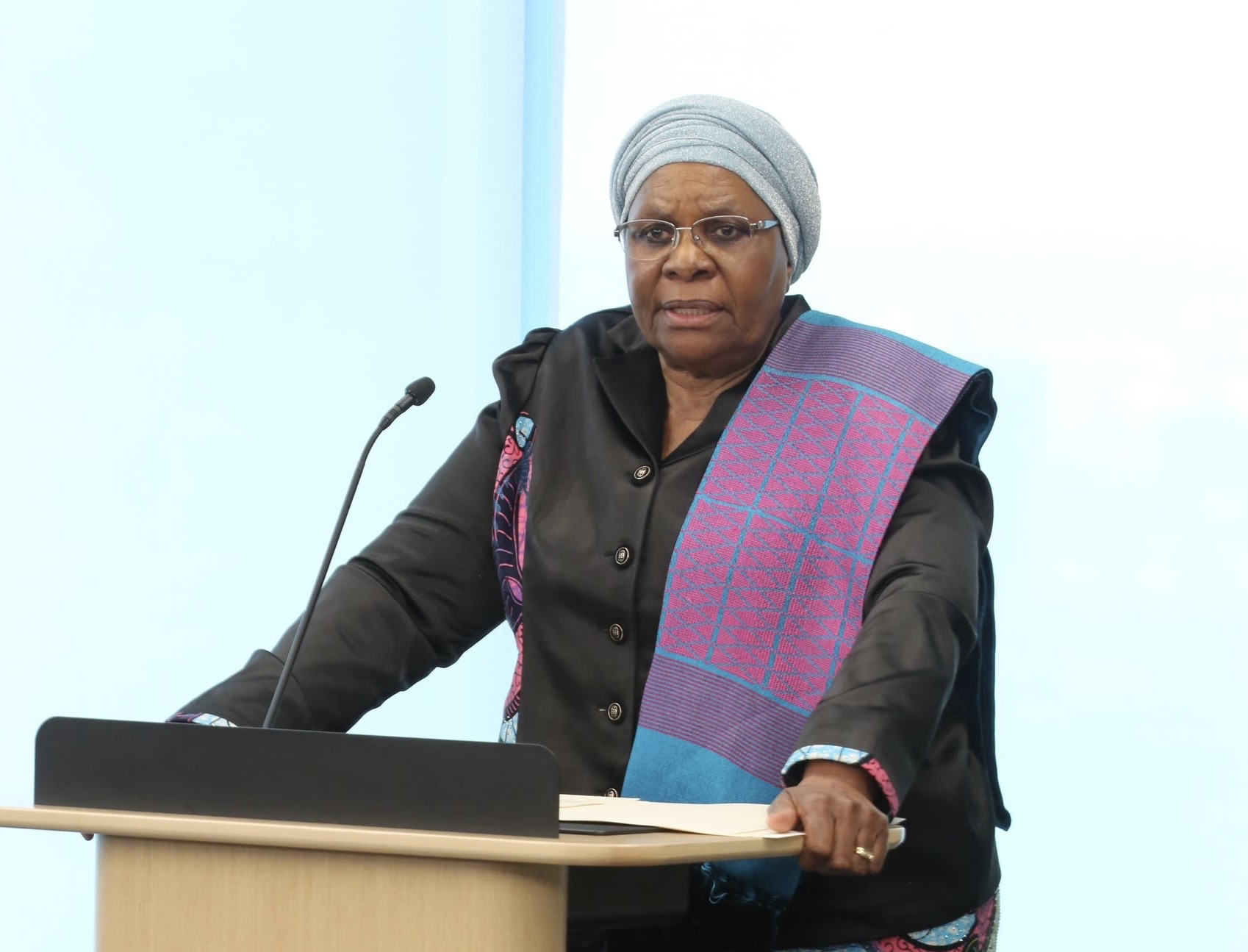
NEW YORK, September 24 — President Netumbo Nandi-Ndaitwah has called on African countries to increase domestic investment in maternal and child healthcare, saying healthier mothers and children are fundamental to Africa’s human capital, productivity and long term development.
Speaking at the high-level “She Rises: Advocacy for a New Era The Women Leading Maternal and Child Health for All” side event in New York on Thursday, Nandi-Ndaitwah said financing maternal and child health should be viewed not as charity, but as an investment in nation-building.
She said Namibia has placed health among the seven national priorities of its Sixth National Development Plan (NDP6), with the country targeting an increase in its Universal Health Coverage Service Coverage Index from 63% to 75% by 2030.
The country also aims to reduce maternal mortality from 139 to 60 deaths per 100,000 live births, while significantly reducing neonatal and under five mortality.
Nandi-Ndaitwah said Namibia launched its Reproductive, Maternal, Newborn, Child and Adolescent Health and Nutrition Strategy 2025–2030 to accelerate progress towards these targets and strengthen healthcare across the continuum of care.
“These are not merely health sector targets, they are also investments in our people and in the future productivity and prosperity of our nation,” she said.
The President said women make up roughly half of Namibia’s population of about 3.1 million, while people under the age of 18 account for nearly 40%, making investment in maternal and child health critical to the country’s human capital and sustainable development.
She linked Namibia’s approach to the broader African Union health agenda, which promotes stronger domestic resource mobilisation, sustainable health financing, primary healthcare and universal health coverage.
Nandi-Ndaitwah also highlighted the 2001 Abuja Declaration, under which African countries committed to allocating at least 15% of national budgets to health, while stressing the need to reduce excessive dependence on unpredictable external financing.
She said Namibia’s health expenditure of US$397 per capita places it among the highest health spenders in the African region and above the WHO-recommended baseline of US$271 per capita.
The President used the occasion to call for greater access to skilled maternal care, particularly in remote and rural communities.
“No woman should have to face that struggle without skilled care simply because of where she lives or what she earns,” she said, stressing that maternal healthcare must reach even the most remote parts of Africa.
While acknowledging the contribution of international development partners, Nandi-Ndaitwah said external assistance should complement, rather than replace, African countries’ own investments in their health systems.
She called for continued international support focused on sustainable investments that strengthen local capacity, infrastructure, human resources and the quality of maternal healthcare.
“There can be no stronger foundation for nation-building than a healthy mother and a healthy child,” Nandi-Ndaitwah said.
She added that women’s empowerment could not be achieved while women continued to die from preventable causes during childbirth, and argued that sustainable African development depended on investing in the people who represent the continent’s future.


