


LÜDERITZ, 27 November 2026 – Namibia has officially opened The Living Coelacanth Exhibition at the Namibia Maritime Museum in Lüderitz, in a move expected to strengthen the country’s maritime heritage, promote scientific education and enhance the town’s tourism offering.
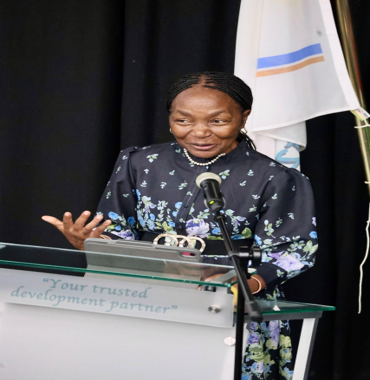
The exhibition was officially opened on Friday by the Minister of Finance, Hon. Erica Shafudah, who highlighted the importance of preserving Namibia’s maritime heritage while creating new opportunities for economic development, particularly for young people and local businesses.
Speaking at the official opening ceremony at the Lüderitz Old Power Station (LOPS) Auditorium, Shafudah described the exhibition as an important addition to Namibia’s tourism and heritage landscape, bringing the remarkable story of the coelacanth to the Namibian public for the first time.
The coelacanth, often described as a “living fossil”, belongs to a lineage dating back nearly 400 million years. Scientists had long believed it was extinct until its rediscovery in December 1938 in a trawler’s catch in East London, South Africa.
Shafudah highlighted the scientific significance of the discovery, noting that it demonstrates the importance of curiosity, scientific research and investment in institutions that preserve and advance knowledge.
She also recognised Professor Mike Bruton, a distinguished South African ichthyologist, for his decades of research, contribution and donation of materials that helped make the exhibition possible.
“On behalf of the Government and people of Namibia, I thank you most sincerely,” she said.
NAMDIA strengthens museum partnership
The opening was also marked by the handover of a permanent exhibition by Namib Desert Diamonds (NAMDIA), showcasing Namibia’s diamond industry and its contribution to the national economy.
The exhibition presents the diamond value chain, covering land-based diamonds mined by Namdeb, marine diamonds recovered by Debmarine Namibia, and the marketing and sale of Namibian diamonds by NAMDIA.
Shafudah welcomed NAMDIA as the museum’s newest partner, emphasising that public enterprises have an important role beyond their financial performance, including educating the public and enriching the communities in which they operate.
Lüderitz positioned for tourism and investment
The Finance Minister further called on the Lüderitz Waterfront Development Company (LWDC) to serve as a catalyst for local economic development by attracting investment, promoting tourism, supporting enterprise development and creating employment opportunities.
She emphasised that a stronger tourism offering could stimulate demand for accommodation, restaurants, tour operators, transport services and locally produced crafts.
She encouraged the company to work closely with small and medium-sized enterprises (SMEs) and young entrepreneurs to ensure that the economic benefits of waterfront development remain within the local community.
Under Namibia’s Sixth National Development Plan (NDP6), economic diversification, inclusive growth and employment creation remain central priorities.
Shafudah identified Lüderitz and the wider //Kharas Region as strategically positioned to contribute to national development through fisheries, mining, renewable energy, logistics and tourism.
She stressed that the challenge is to translate these opportunities into sustainable local enterprises, skills development and jobs for Namibians.
Blue economy and youth opportunities
The Minister also highlighted the potential of Namibia’s blue economy, noting that the country’s ocean resources offer opportunities beyond fisheries and marine mining, including scientific research, education and sustainable tourism.
She called for responsible management of marine resources and stronger cooperation across sectors to unlock these opportunities.
Shafudah also welcomed the exhibition’s youth-focused programme, which includes debates, poetry and arts competitions, as well as the display of learners’ creative work.
She expressed hope that the initiative would strengthen young people’s appreciation of maritime heritage, inspire scientific curiosity and encourage greater participation in the sustainable development of Lüderitz.
The Minister commended the collaborative efforts of the Lüderitz Waterfront Development Company, private-sector partners, public enterprises, local authorities, academia and the community.
She noted that partnerships that mobilise additional resources and expertise are essential to achieving sustainable development, particularly as Government cannot meet all development needs through the national budget alone.
Shafudah subsequently declared The Living Coelacanth Exhibition officially open and invited guests to join her for the unveiling of the commemorative plaque, ribbon-cutting ceremony and exhibition tour.


