


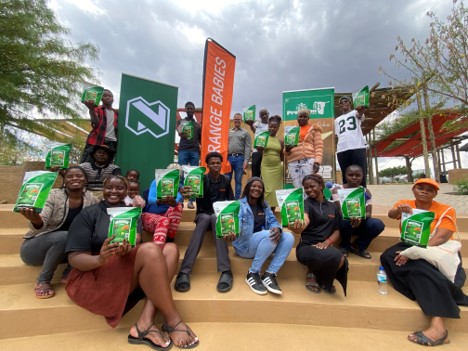
Windhoek, Nov 9 — At a time when rising food costs continue to place pressure on vulnerable households, Orange Babies Namibia
has received horticultural training for caregivers and community members at its Pappa Centre in Windhoek’s Otjomuise suburb. The nonprofit organization supports the health, education and well-being of vulnerable
children and young people.
Through a partnership between Agra ProVision and Nedbank Namibia, 16 caregivers and community members recently received practical horticultural training and starter packs to help them establish and maintain productive vegetable gardens. The initiative aims to improve access to fresh produce, strengthen household nutrition and support the daily meal needs of children attending the Orange Babies after-school programme in Otjomuise.
The initiative will support the development of the Centre’s community garden as a sustainable source of fresh vegetables. It also equips caregivers with skills they can apply in their own homes and communities. According to Dr Fiona Anderson, Manager of Agra ProVision, the programme is designed to create an impact beyond the initial training sessions.
“Food security starts with knowledge and the ability to produce food sustainably. By equipping caregivers with practical horticultural skills and the resources to begin planting immediately, we are helping to build resilience within households and creating opportunities for communities to become more self-reliant,” said Anderson.
The project forms part of Agra ProVision’s ongoing efforts to strengthen food production capacity in communities
across Namibia. Since becoming a beneficiary of the Nedbank for Good Series in 2024, Agra ProVision has received N$576 000
to expand agricultural development initiatives aimed at improving food security and community resilience.
Janet Kapenda, Head of Marketing and Communications at Nedbank Namibia, said meaningful community development requires solutions that address the underlying challenges communities face.
“Across Namibia, many families continue to experience pressure from the rising cost of living. Initiatives like this are important because they do more than provide temporary assistance. They equip people with practical skills that enable them to produce food, support their families and create lasting value within their communities. Ultimately, this is about helping to build more resilient communities while improving the well-being of children,” said Kapenda.
Justina Shikongo, Coordinator of the Orange Babies Pappa Centre, said the initiative had provided staff and community members with valuable knowledge and practical skills. These included identifying plant-related challenges, selecting suitable crops and understanding how to grow food successfully.
“We appreciate the support from Agra ProVision and Nedbank Namibia in helping our staff and community members develop their gardening knowledge. The training and starter packs give us a useful foundation from which to develop our existing garden and involve children through our Environmental and Gardening Club.
“Gardening offers another way for children to learn practical skills. We hope that, over time, the garden will also contribute fresh produce to the meals served at the Centre. At Orange Babies Namibia, we are committed to improving the health, education and overall well-being of vulnerable children and young people while strengthening the families and communities around them. Initiatives such as this directly contribute to that mission,” said Shikongo.
Since its launch in 2020, the Nedbank for Good Series has raised more than N$1.87 million for community development projects across Namibia. The Series supports organizations working in areas that include education, food security and community development.
Agra ProVision’s partnership with the Series has directed funding towards horticultural training and agricultural capacity development. Previous programmes funded through the partnership have reached communities in several parts of Namibia, providing participants with training and starter resources to establish gardens.
Kapenda said the work at Orange Babies demonstrates how the broader contribution of the Series is applied
through a specific community initiative.
“The value of the Series lies in what the funding enables after the final round has been played. In this instance, it has supported training that can help participants make productive use of an existing garden, work towards greater food self-sufficiency and potentially contribute fresh produce to the Orange Babies after-school programme,” she said.
Agra ProVision will conduct a follow-up visit to assess the garden’s progress and understand how participants
have applied the training.
“The follow-up visit will help us understand what has happened since the training and how participants have
used the knowledge and resources provided,” Anderson said.


