


Historic repatriation marks a moment of dignity restored, history reclaimed and healing
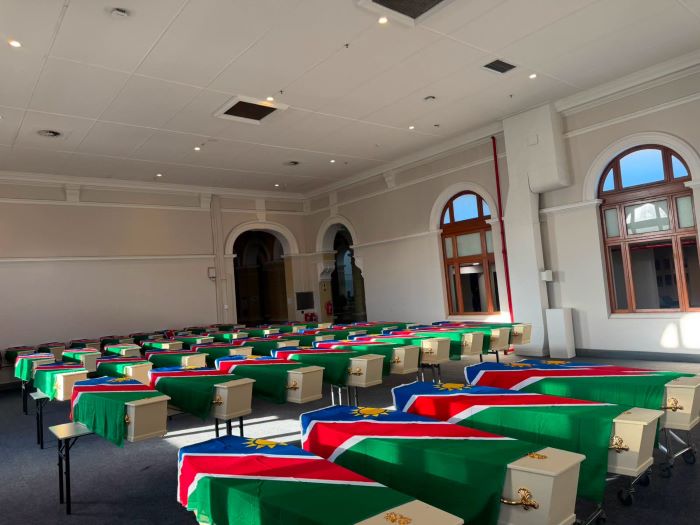
WINDHOEK, Aug 20 — Namibia has marked a historic moment of homecoming with the repatriation of ancestral remains from South Africa, including those of two Namibian freedom fighters, Festus Nehale and Simon Petrus Niilenge, who died while in South African custody.
The ceremony is being led by Sanet Steenkamp, Minister of Education, Innovation, Youth, Sports, Arts and Culture, representing the Government and people of Namibia, and President Dr Netumbo Nandi-Ndaitwah, who serves as Chief Mourner.
Minister Steenkamp said the occasion was far more than the transfer of human remains from one country to another.
“We have come to bring our people home,” she said, emphasising that those returning were not museum objects or scientific specimens, but people with names, families, communities, identities and histories.
The repatriation follows decades in which the remains of Namibians were separated from their homeland during the colonial and apartheid eras. Some were placed in colonial scientific and museum collections, while others, including Nehale and Niilenge, were imprisoned due to their involvement in the liberation struggle.
RESTORING DIGNITY
The ceremony placed strong emphasis on restoring the dignity and humanity of those whose remains had been removed from their communities.
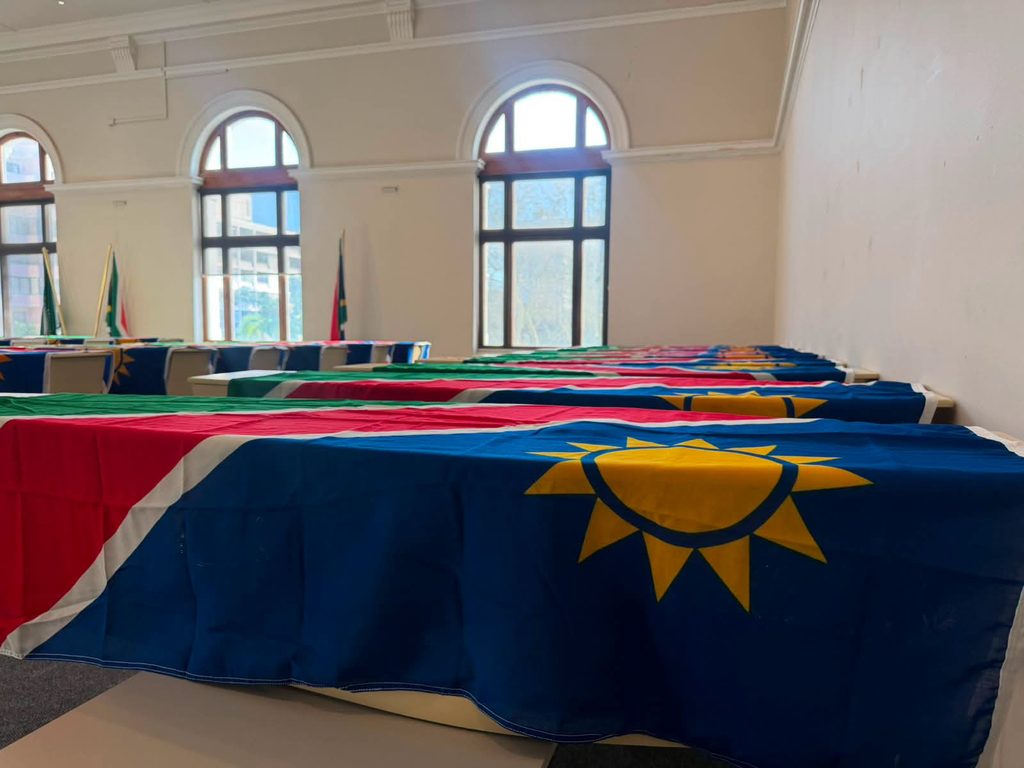
The Government stressed that placing the remains in coffins forms part of a broader process of re-humanisation, reinforcing the principle that a human being is not an artefact.
Repatriation was also described as an ethical responsibility for governments, museums, researchers and heritage institutions to ensure that historical practices and classifications reflect the dignity of the people being returned.
FAMILIES AND TRADITIONAL AUTHORITIES CENTRAL
Minister Steenkamp underscored that repatriation must be undertaken with communities, not to communities.
Traditional Authorities provided cultural and customary guidance, while the families of Festus Nehale and Simon Petrus Niilenge were consulted throughout and gave their consent.
Officials noted that the process does not end with the physical return. Further provenance research will continue to establish identities, histories, communities and localities linked to the ancestors.
HONOURING THE FALLEN
Nehale and Niilenge were remembered as Namibians who became part of the struggle against colonialism, racial oppression and apartheid.
Their imprisonment on Robben Island and subsequent deaths in South African custody kept them away from their homeland and families for decades.
Their return restores their place in Namibia’s national memory and honours the sacrifices made by generations in the struggle for independence.
The ceremony also invoked Namibia’s National Anthem:
“Glory to their bravery, whose blood waters our freedom.”
NAMIBIA AND SOUTH AFRICA CONFRONT SHARED HISTORY
The repatriation was described as a demonstration of Namibia and South Africa confronting their shared and painful history with honesty, courage and cooperation.
The Namibian Government expressed appreciation to the South African Government, Minister Gayton McKenzie and his ministry, as well as the Department of Sport, Arts and Culture, Iziko Museums of South Africa, Robben Island Museum, the South African Heritage Resources Agency, the Missing Persons Task Team, and numerous researchers, forensic experts, archivists and heritage practitioners.
The Government said the process should encourage continued cooperation on provenance research, restitution, and the return of cultural heritage taken from Namibian communities during the colonial period.
RESPONSIBILITY TO FUTURE GENERATIONS
Minister Steenkamp emphasised that bringing the ancestors home creates a renewed responsibility to preserve their stories for future generations.
Veterans and former political prisoners present at the ceremony were also honoured for carrying living memories that cannot be found in archives alone.
She said Namibia’s children and grandchildren must understand that freedom was not freely given, but earned through sacrifice and struggle.
A MOMENT OF HOMECOMING
The ceremony was described as “a moment of dignity restored, a moment of history reclaimed, a moment of healing and, above all, a moment of homecoming.”
For the families of Nehale and Niilenge, the occasion marked the end of a long and painful separation.
“They are coming home to Namibia. They are coming home to their people. They are coming home to a free country,” Minister Steenkamp said.
As the ancestors and fallen freedom fighters return to Namibian soil, the Government pledged to ensure their names, histories and sacrifices remain permanently embedded in the nation’s memory.
“Today, we bring our people home. Tomorrow, we carry their memory forward.”


