

TEHRAN/WASHINGTON, July 21– A month after Iran and the United States signed a memorandum of understanding (MoU), renewed exchanges of attacks between them have cast severe uncertainty over the future of diplomacy and peace.
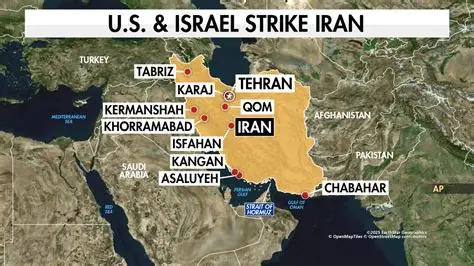
Under the MoU, the two sides were expected to hold talks on a comprehensive deal within 60 days. However, negotiations have stalled amid intensifying disputes over the Strait of Hormuz and escalating hostilities. On Saturday, Iran announced that it had suspended fulfilling its obligations under the MoU, accusing Washington of violating its commitments to the deal. The announcement came after the United States carried out multiple rounds of strikes on Iran in recent days while Tehran responded with retaliatory attacks targeting U.S. bases and facilities in the Gulf region.
FRAGILE CEASEFIRE
On Sunday evening, U.S. forces launched a new wave of strikes against Iran for the ninth consecutive night. On the same day, Jordan, Kuwait and Bahrain reported fresh Iranian attacks.
A U.S. serviceman was killed in action in northern Iraq during a controlled detonation of unexploded ordnance from a downed Iranian one-way attack drone on Saturday, the U.S. Central Command (CENTCOM) said on Sunday. Separately, U.S. military personnel found unidentified remains on Sunday after CENTCOM announced on Saturday the death of two U.S. service members and the missing status of one in Jordan following an Iranian attack on Friday. The key factor driving the renewed round of fighting is Washington’s attempt to subvert Iran’s control of the Strait of Hormuz, and thereby diminish Iran’s leverage over oil prices, said Sourabh Gupta, a senior fellow with the Institute for China-America Studies in Washington, D.C. Tehran views this subversion as a deceitful attempt by Washington to deny Iran’s hard-won gains of the last round of earlier fighting. Hence, both sides are now dug in and have resorted to fighting again, he said.
The resumption of attacks reflects the fragility of the ceasefire. Eyal Zisser, vice-rector of Tel Aviv University and an expert on Middle East affairs, said the problem with the MoU existed from the very beginning as it contained broad political commitments, but very few operational details, leaving many of the most sensitive issues unresolved. Mustafa Ibrahim, a Gaza-based political analyst, said the MoU did not resolve anything but postponed discussion of the most contentious issues. These issues include Iran’s uranium enrichment program, ballistic missile program, U.S. sanctions, and disputes over the management of the Strait of Hormuz and fees on oil tankers and oil exports through the waterway, he said. For his part, Refaat Badawi, a political analyst and a former presidential advisor in Lebanon, said that despite the signed MoU, it is difficult for the United States to implement it, and it is also difficult for Iran to accept any transgression outside the framework of this memorandum. “I think that the main reasons that led to this renewed escalation, and in a deep way compared to before, are the loss of trust between the United States and Iran, and this matter will not have a solution soon, because the trust factor has entered a very delicate stage, especially after Trump withdrew from the 2015 agreement,” he said.
STRATEGIC MISTRUST
For many observers, the immediate flashpoints are only part of the story. Beneath the recurring cycles of escalation lies a much deeper strategic confrontation that has shaped relations between Washington and Tehran for more than four decades, both viewing regional influence as central to their national security and long-term interests.
“Any understanding reached between Washington and Tehran is often difficult to sustain because of the deep-seated lack of trust between the two sides,” said Sudanese conflict researcher Naji Ajeeb. “Their dispute has become rooted in historical, security and geopolitical factors, rather than being limited to the nuclear issue or current political developments.” Since Iran’s 1979 Islamic Revolution, relations between Washington and Tehran have evolved into an institutionalized state of hostility, while decades of crises have deepened the rivalry, from the U.S. embassy hostage crisis in Tehran to economic sanctions, disputes over Iran’s nuclear program, and indirect confrontation through regional allies, he noted. “Neither side views the other’s actions as isolated moves,” he said. “Instead, each interprets them within a broader perception of threat, making even temporary agreements fragile and susceptible to collapse.”
HIGH COST
Despite the renewed fighting, analysts believe the high cost of further escalation makes a full-scale war unlikely.
Neither Washington nor Tehran appears interested in a full-scale war, given the potential for huge losses. The United States faces rising domestic economic pressures, including soaring oil prices, while Iran has come under heavy military strikes that have further damaged its economy, said Mustafa Ibrahim. An agreement remains possible if both sides can reach an understanding on key issues, particularly sanctions relief, U.S. policies regarding the Strait of Hormuz and other unresolved disputes, he said. Sourabh Gupta, a senior fellow at the Institute for China-America Studies, argued that any attempt by Washington to take control of the Strait of Hormuz or Iran’s oil export terminals would come at a heavy military and economic cost, making it more likely that the two sides will eventually return to negotiations to resolve issues that cannot be settled through military means.
Analysts noted, however, that avoiding a full-scale war does not necessarily mean lasting stability. They said diplomacy would likely coexist with continued strategic competition, leaving the risk of periodic escalation and broader regional and global repercussions. “The current equation is based on each side trying to strengthen its negotiating position without pushing the region into open conflict,” said Sudanese economist Mohamed Al-Nayer. “But as long as mutual trust remains absent, the risk of renewed escalation will always persist.” If the conflict continues, it will ultimately transform the Middle East into an open arena where everyone’s limits are tested, with Gulf states no longer immune, said Jumaa Mohammed, a politics professor at Iraq’s Tikrit University. With strikes reaching Bahrain, Kuwait and Jordan, every country in the region is now a frontline, facing a stark dilemma: host U.S. bases or risk becoming Iranian targets, he said.
Abu Bakr al-Deeb, an advisor at the Cairo-based Arab Center for Research and Studies, said a widening conflict could dismantle the remaining Western-led security architecture, exposing the United States as a source of global instability rather than a guarantor of security. “I see regional states that previously relied on the U.S. military protection beginning to realize that this alignment only brings conflict, economic ruin and proxy wars to their doorsteps, forcing them to reconsider their alliances,” he said. More broadly, sustained U.S.-Iran tensions would leave the Middle East in a far more fragile security environment, said Eyal Zisser. “Instead of moving toward a stable regional order after the recent ceasefire, the region could enter a prolonged period of recurring crises, limited military confrontations and constant uncertainty,” said Zisser.
Xinhua


