

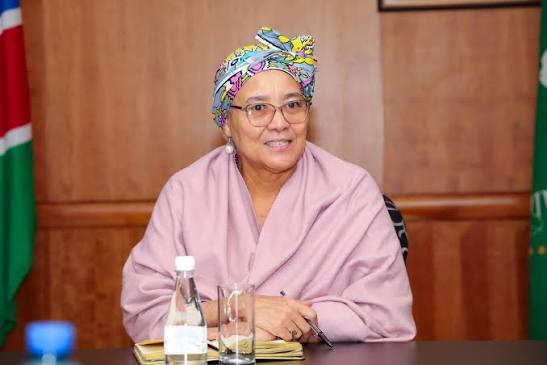
Her Excellency Madam Lucia Witbooi, Vice President of the Republic of Namibia, on 27 October 2025 officially launched the Revised National Policy on Disability for the period 2025 to 2035 alongside its Costed Implementation Plan in Windhoek, Khomas Region. The event marks a significant milestone in Namibia’s commitment to the inclusion, participation, and empowerment of persons with disabilities as equal citizens.
The original National Policy on Disability, adopted in 1997, laid the foundation for coordinated action and awareness in the post-independence era. However, societal progress and the global shift toward recognizing disability as a human rights and development issue, signaled by Namibia’s ratification of the United Nations Convention on the Rights of Persons with Disabilities (UNCRPD) in 2007, necessitated a comprehensive update. The revised policy replaces the 1997 framework and embraces a rights-based approach emphasizing equality, dignity, and non-discrimination.
The Vice President highlighted that disability should no longer be seen as a limitation of the individual, but rather as barriers created by society be they physical, communicative, educational, or attitudinal. This policy positions persons with disabilities as active contributors to national development, aligning with Namibia’s Vision 2030, the Sustainable Development Goals, and the National Development Plan 6 (NDP6).
Central to this launch is the Costed Implementation Plan, a detailed roadmap defining actionable priorities, timelines, resources, and responsibilities spanning government ministries, regional councils, and local authorities. Key focus areas include inclusive education, employment and economic empowerment, accessible healthcare and rehabilitation services, infrastructure improvements, disaster risk management, and strengthened representation and capacity building within the disability sector.
The policy development process was inclusive, involving persons with disabilities, advocacy organizations, policymakers, service providers, and development partners. Challenges such as limited access to basic services, underrepresentation, and infrastructural barriers were identified and addressed within the framework.
Vice President Witbooi called for multisectoral collaboration among government, private sector, civil society, and the disability community to ensure effective implementation. The principle of “Nothing About Us Without Us” was emphasized, underscoring the importance of involving persons with disabilities from planning through evaluation.
In appreciation, she acknowledged the National Disability Council of Namibia, United Nations Systems in Namibia, development partners, and civil society organizations for their dedication in shaping this policy.
Her closing message stated, “Disability inclusion is not a favour, it is a fundamental part of human development. When we make our schools accessible, we educate every child. When we make our workplaces inclusive, we grow our economy. When we make our towns barrier-free, we build a Namibia for all.” The Vice President officially declared the revised policy and costed plan launched, marking the beginning of a new era of partnership and accountability for disability inclusion in Namibia.


